
News
- Home
- Teleradiology vs In-House Radiology | Which Is Better?
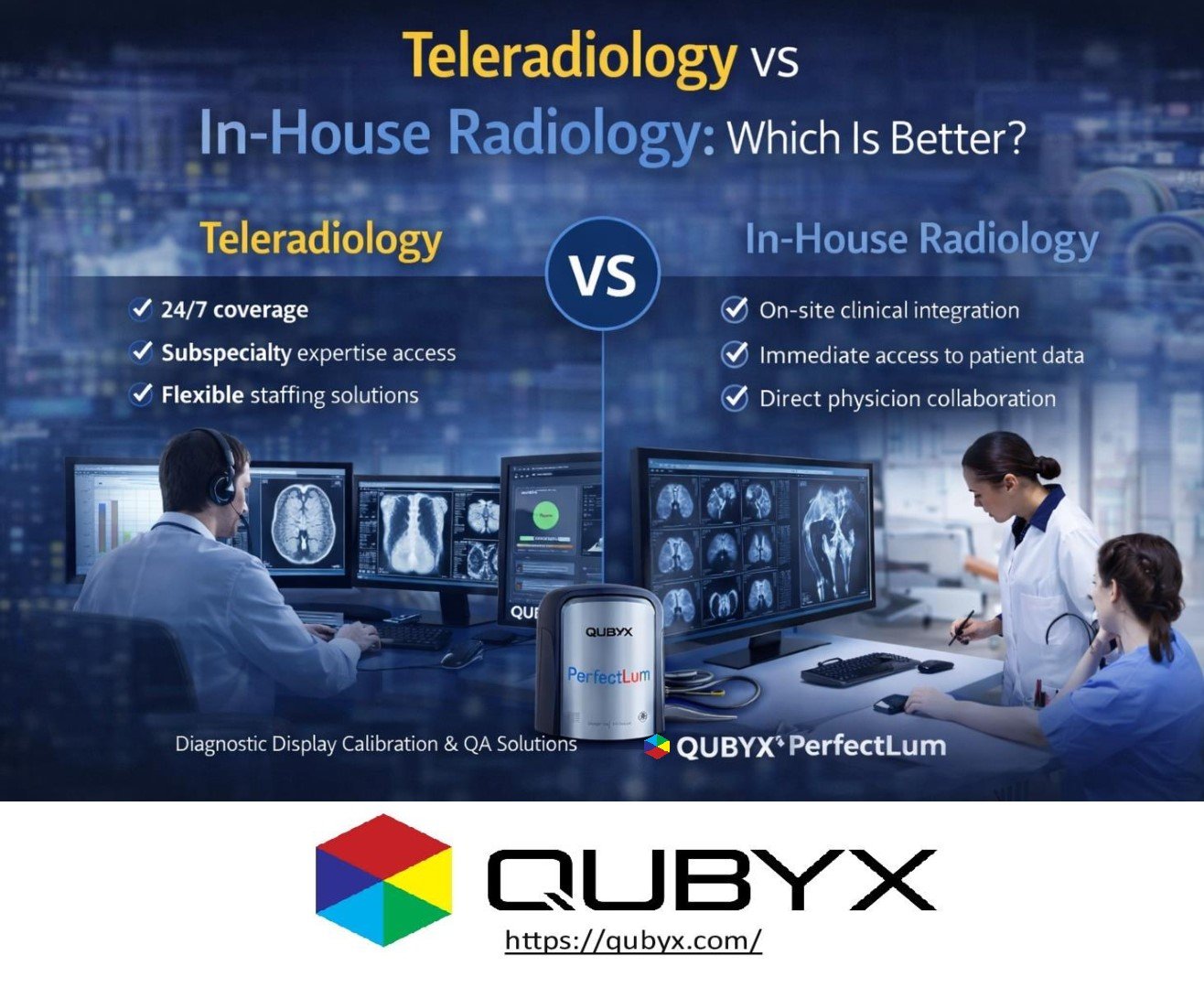
Teleradiology vs In-House Radiology | Which Is Better?
- March 8, 2026
- QUBYX Team
Teleradiology vs In-House Radiology | Which Is Better for Modern Hospitals?
Healthcare systems are experiencing unprecedented growth in diagnostic imaging demand. CT scans, MRI studies, X-rays, and ultrasound imaging are now essential for diagnosing disease, guiding treatment decisions, and monitoring patient outcomes.
However, hospitals worldwide are facing significant operational challenges, including a radiology staffing shortage, rising operational costs, and the need for continuous diagnostic coverage.
As a result, many healthcare leaders are evaluating Teleradiology vs In-House Radiology to determine which approach delivers the best balance of efficiency, quality, and cost control.
This article provides a detailed comparison of Teleradiology vs In-House Radiology, examining clinical workflows, cost considerations, staffing challenges, and quality assurance requirements. It also explores how technologies such as PerfectLum, developed by QUBYX, support reliable diagnostic interpretation in both environments.
Understanding In-House Radiology
In-house radiology refers to the traditional model where radiologists work within the hospital or imaging center where diagnostic studies are performed.
These radiologists interpret imaging studies on-site using hospital-based PACS systems and diagnostic workstations.
The in-house model has historically been the standard for hospital radiology services.
Advantages of In-House Radiology
Several benefits are associated with the traditional model:
Direct communication with clinicians
Radiologists can easily consult with referring physicians, discuss findings, and review patient history.
Strong integration with hospital workflows
Radiologists working within the hospital are closely integrated with clinical teams and patient care processes.
Immediate access to patient data
On-site radiologists can quickly access patient records, lab results, and clinical notes.
These advantages can be particularly valuable for complex cases requiring collaboration between radiologists and physicians.
Challenges of In-House Radiology
Despite its strengths, the traditional model also faces several challenges.
Radiology staffing shortage
Many hospitals struggle to recruit and retain qualified radiologists, especially for overnight coverage.
High operational costs
Maintaining a full in-house radiology department requires significant investment in salaries, benefits, recruitment, and equipment.
Limited subspecialty coverage
Smaller hospitals may not have access to specialists in areas such as neuroradiology or pediatric radiology.
These challenges have encouraged healthcare organizations to explore alternatives such as outsourced radiology services.
What Is Teleradiology?
Teleradiology enables medical images to be transmitted electronically to radiologists located in different locations for interpretation.
Using secure networks and digital imaging systems, hospitals can send CT scans, MRIs, and other imaging studies to remote radiologist services.
This approach allows hospitals to expand diagnostic capacity while addressing staffing challenges.
Benefits of Teleradiology
When evaluating Teleradiology vs In-House Radiology, several advantages of the teleradiology model become clear.
1. Addressing the Radiology Staffing Shortage
One of the most significant drivers of teleradiology adoption is the ongoing radiology staffing shortage.
Hospitals in many regions face difficulties recruiting radiologists, particularly for night shifts and rural healthcare facilities.
By leveraging remote radiologist services, hospitals can maintain continuous diagnostic coverage without relying solely on local staff.
2. Access to Subspecialty Radiologists
Another key advantage of outsourced radiology services is access to subspecialists.
Teleradiology networks often include radiologists with expertise in:
-
neuroradiology
-
musculoskeletal imaging
-
pediatric radiology
-
cardiac imaging
This allows hospitals to obtain expert interpretations that may not be available locally.
3. 24/7 Diagnostic Coverage
Emergency departments operate around the clock, and imaging studies frequently require immediate interpretation.
Teleradiology enables hospitals to access radiologists in different time zones, ensuring continuous diagnostic support.
4. Operational Flexibility
Remote radiology services allow hospitals to scale diagnostic capacity according to demand.
During peak imaging periods, additional radiologists can assist with reporting workloads.
Comparing Teleradiology vs In-House Radiology
The decision between Teleradiology vs In-House Radiology depends on several factors.
Below is a comparison of key considerations.
| Factor | In-House Radiology | Teleradiology |
|---|---|---|
| Radiologist availability | Limited to local staff | Access to global radiology networks |
| Subspecialty expertise | Often limited | Access to multiple specialists |
| Staffing costs | Higher fixed costs | Flexible outsourcing models |
| Overnight coverage | Requires night shifts | Remote radiologist services available |
| Workflow integration | Strong on-site integration | Requires digital integration |
For many hospitals, a hybrid model combining both approaches provides the most effective solution.
Diagnostic Display Quality in Radiology
Regardless of whether radiologists work on-site or remotely, diagnostic accuracy depends heavily on display quality.
Radiologists interpret images based on subtle grayscale differences that reveal abnormalities in medical scans.
Diagnostic displays must therefore follow strict standards such as the DICOM Part 14 Grayscale Standard Display Function (GSDF).
Without proper calibration, monitors may experience:
-
luminance drift
-
inconsistent grayscale representation
-
reduced contrast visibility
These issues can affect diagnostic interpretation.
The Role of QUBYX PerfectLum in Teleradiology vs In-House Radiology
Maintaining consistent display performance across radiology workstations requires specialized calibration tools.
Solutions such as PerfectLum developed by QUBYX help healthcare institutions ensure diagnostic display compliance with DICOM standards.
PerfectLum supports both teleradiology and in-house radiology environments by providing:
-
automated luminance monitoring
-
diagnostic monitor uniformity testing
-
scheduled quality assurance checks
-
centralized compliance dashboards
-
audit-ready reporting documentation
For remote radiologist services, where radiologists may interpret images from multiple locations, maintaining consistent display calibration is essential for reliable diagnostics.
Similarly, in traditional hospital reading rooms, PerfectLum ensures that diagnostic displays remain compliant with imaging standards.
When Should Hospitals Choose Teleradiology?
Teleradiology vs In-House Radiology
Hospitals often choose outsourced radiology services when they face:
-
persistent radiology staffing shortage
-
need for overnight coverage
-
increasing imaging volumes
-
lack of subspecialty radiologists
In these situations, teleradiology provides an efficient solution that expands diagnostic capacity.
When In-House Radiology Is Preferable
In-house radiology remains valuable when hospitals require:
-
close collaboration between radiologists and clinical teams
-
complex multidisciplinary case discussions
-
immediate access to patient records and clinical context
Large medical centers often maintain strong in-house teams while supplementing capacity with teleradiology services.
Hybrid Radiology Models: Teleradiology vs In-House Radiology
Many hospitals now adopt hybrid strategies combining in-house radiology and remote radiologist services.
This approach allows healthcare institutions to:
-
maintain strong local radiology teams
-
access subspecialty expertise through teleradiology
-
ensure overnight diagnostic coverage
-
improve operational efficiency
Hybrid models often deliver the best balance between quality, cost control, and diagnostic availability.
The Future of Radiology Workflows
As healthcare systems continue to evolve, the debate around Teleradiology vs In-House Radiology will remain relevant.
Advances in digital imaging infrastructure, cloud-based PACS systems, and artificial intelligence will further enhance remote diagnostic capabilities.
At the same time, maintaining high standards of diagnostic quality will remain essential.
Quality assurance technologies such as QUBYX PerfectLum will play an important role in ensuring consistent display performance across distributed radiology environments.
Conclusion
The question of Teleradiology vs In-House Radiology does not have a single answer.
Both approaches offer unique advantages, and the best solution often depends on the hospital’s size, resources, and clinical requirements.
In-house radiology provides strong clinical integration and collaboration, while outsourced radiology services help address the growing radiology staffing shortage and provide flexible diagnostic capacity.
By combining local expertise with remote radiologist services, hospitals can build scalable imaging infrastructures that improve patient care.
At the same time, maintaining diagnostic accuracy requires consistent display calibration and quality assurance.
Solutions such as QUBYX PerfectLum help ensure that radiologists—whether on-site or remote—interpret images under consistent and compliant viewing conditions.
As imaging demand continues to grow, healthcare organizations that carefully evaluate Teleradiology vs In-House Radiology will be best positioned to deliver reliable, efficient, and high-quality diagnostic services.
Start the conversation with our calibration experts today.
In a world where every Pixel accuracy matters, PerfectLum by QUBYX proves that innovation can deliver clinical precision without financial compromise. It’s not just calibration—it’s the democratization of diagnostic imaging.
PerfectLum is Medical Display Calibration & QA Software by QUBYX LLC that delivers consistent, audit-ready display performance through standardized calibration, verification, and centralized quality assurance for radiology and teleradiology environments.
Tags:
Teleradiology vs In-House Radiology, outsourced radiology services, radiology staffing shortage, PerfectLum, QUBYX, remote radiologist services, hospital radiology outsourcing, teleradiology workflow, diagnostic display calibration, QUBYX PerfectLum
Related Posts
- March 23, 2026
- News
- March 23, 2026
- News
- March 15, 2026
- News
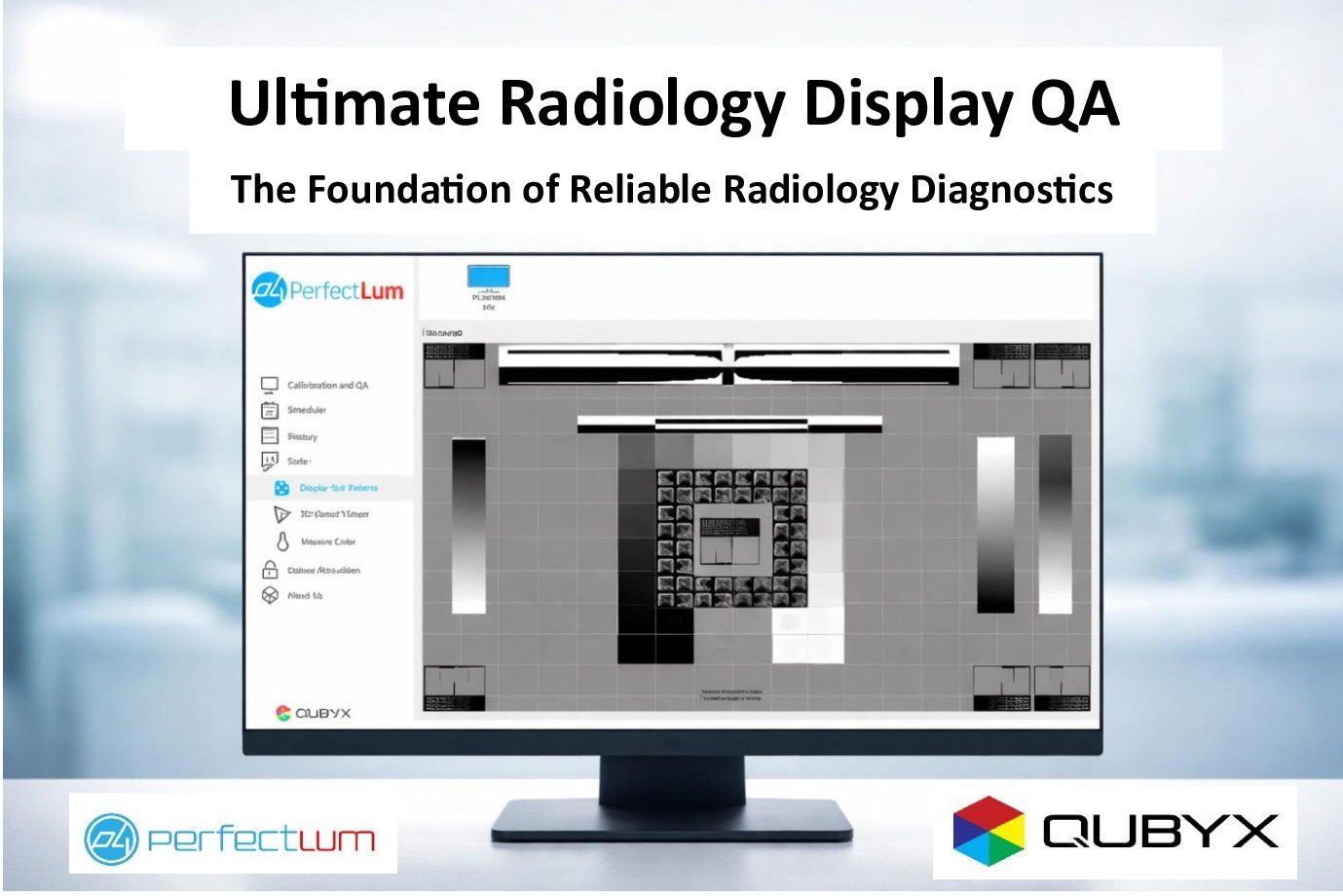
High-Precision Radiology Display QA with PerfectLum The Foundation of Reliable