
News
- Home
- Standardize Diagnostic Displays Globally with PerfectLum
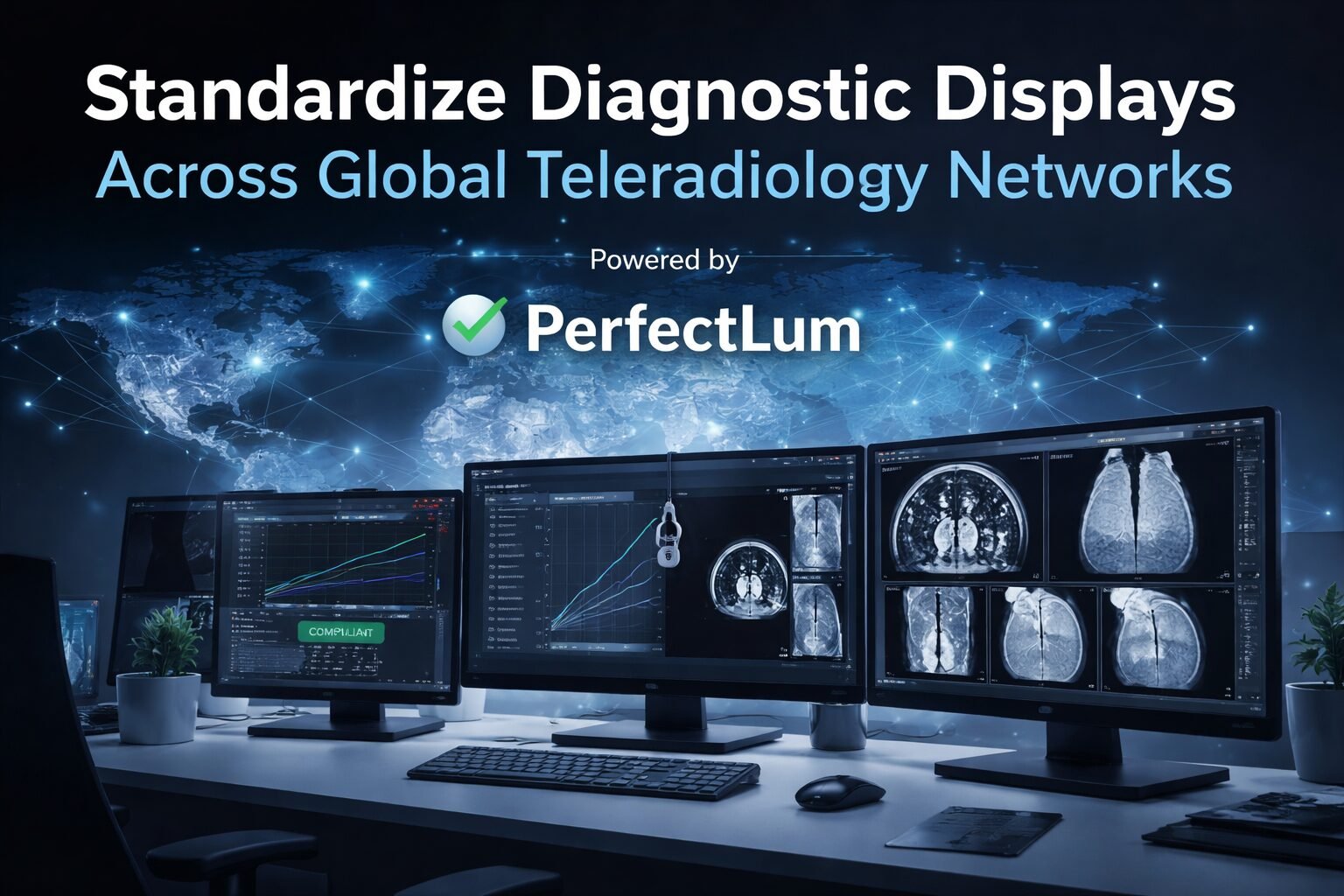
Standardize Diagnostic Displays Globally with PerfectLum
- January 16, 2026
- Shamsul
How to Standardize Diagnostic Displays Across Global Teleradiology Networks with PerfectLum
Introduction: Why PerfectLum Matters in Global Teleradiology
As healthcare systems increasingly rely on distributed radiology services, the need to standardize diagnostic displays across global teleradiology networks has become a strategic priority. While international standards such as DICOM GSDF define what compliance looks like, organizations still face a critical question: How can this be enforced consistently across hundreds or thousands of remote workstations?
This is where PerfectLum® becomes central. PerfectLum is designed specifically to operationalize display standardization at scale—transforming regulatory requirements into continuous, measurable, and auditable quality assurance.
The Core Challenge PerfectLum Solves
Many teleradiology providers attempt to standardize diagnostic displays across global teleradiology networks through manual calibration, local policies, or inconsistent third-party tools. These approaches fail because they are:
-
Labor-intensive and error-prone
-
Difficult to enforce remotely
-
Poorly documented for audits
-
Unsuitable for rapid network expansion
PerfectLum addresses these gaps by delivering centralized, automated, and standards-driven display quality management.
How PerfectLum Helps Standardize Diagnostic Displays Across Global Teleradiology Networks
1. Automated DICOM GSDF Calibration at Scale
To standardize diagnostic displays across global teleradiology networks, calibration must be repeatable and objective. PerfectLum ensures:
-
Automated calibration to DICOM GSDF
-
Consistent grayscale response across all diagnostic displays
-
Reduced dependence on local technical expertise
This guarantees that radiologists in different countries view images with equivalent perceptual accuracy.
2. Centralized Quality Assurance for Distributed Workstations
PerfectLum enables organizations to standardize diagnostic displays across global teleradiology networks through centralized oversight. From a single interface, QA teams can:
-
Monitor display compliance status in real time
-
Identify underperforming or drifting displays
-
Enforce calibration schedules remotely
This level of visibility is essential for large, multi-site teleradiology operations.
3. Role-Based Display Standardization
Not every workstation requires the same performance threshold. PerfectLum supports tiered display policies, allowing organizations to:
-
Define standards for primary diagnostic reading
-
Apply lighter requirements for secondary or clinical review
-
Maintain cost efficiency without compromising diagnostic integrity
This structured approach helps standardize diagnostic displays across global teleradiology networks intelligently.
Environmental Consistency and Reading Confidence
Even a perfectly calibrated display can fail if used in a poor environment. PerfectLum supports broader standardization initiatives by enabling:
-
Verification of luminance stability over time
-
Detection of performance drift due to aging or ambient factors
-
Objective evidence of display fitness for diagnostic use
This strengthens radiologist confidence and reduces interpretation variability.
Compliance, Audits, and Accreditation Readiness
Organizations that standardize diagnostic displays across global teleradiology networks using PerfectLum gain a decisive compliance advantage. PerfectLum provides:
-
Automatically generated calibration logs
-
Historical QA records for each display
-
Audit-ready documentation aligned with international standards
This simplifies accreditation processes and reduces regulatory risk.
Business Impact of Using PerfectLum
Beyond clinical quality, PerfectLum delivers tangible operational benefits when used to standardize diagnostic displays across global teleradiology networks:
-
Lower discrepancy and re-read rates
-
Reduced downtime caused by display failures
-
Faster onboarding of new radiologists and sites
-
Scalable growth without proportional QA staffing increases
In competitive teleradiology markets, this operational maturity becomes a differentiator.
Future-Proofing Global Teleradiology with PerfectLum
As teleradiology evolves, the expectations for quality assurance will only intensify. PerfectLum positions organizations to stay ahead by supporting:
-
Enterprise-wide display governance
-
Integration with PACS and VNA ecosystems
-
Long-term performance trending and analytics
-
Expansion into new regions with consistent quality baselines
The ability to standardize diagnostic displays across global teleradiology networks is no longer a one-time project—it is an ongoing operational discipline.
Conclusion
To standardize diagnostic displays across global teleradiology networks, healthcare organizations need more than standards—they need enforcement, visibility, and proof. PerfectLum transforms display calibration and quality assurance into a centralized, scalable, and audit-ready process.
By embedding PerfectLum into their teleradiology infrastructure, providers ensure consistent diagnostic confidence, regulatory compliance, and sustainable global growth.
Start the conversation with our calibration experts today.
In a world where every Pixel accuracy matters, PerfectLum by QUBYX proves that innovation can deliver clinical precision without financial compromise. It’s not just calibration—it’s the democratization of diagnostic imaging.
To secure Medical Display Quality Assurance with precision while reducing the recurring costs of proprietary hardware, the answer is clear: transition to a Calibration Software platform with QUBYX OS Tools (Free) and PerfectLum today. Now, you easily pay less for Radiology.
Tags:
standardize diagnostic displays, PerfectLum display calibration, teleradiology display standardization, DICOM GSDF compliance software, medical imaging quality assurance, enterprise radiology QA, remote radiology display control
Related Posts

- January 16, 2026
- News
How to Standardize Diagnostic Displays Across Global Teleradiology Networks with
- January 16, 2026
- News
How QUBYX LLC Is Advancing Medical Display Calibration Software
- January 15, 2026
- News
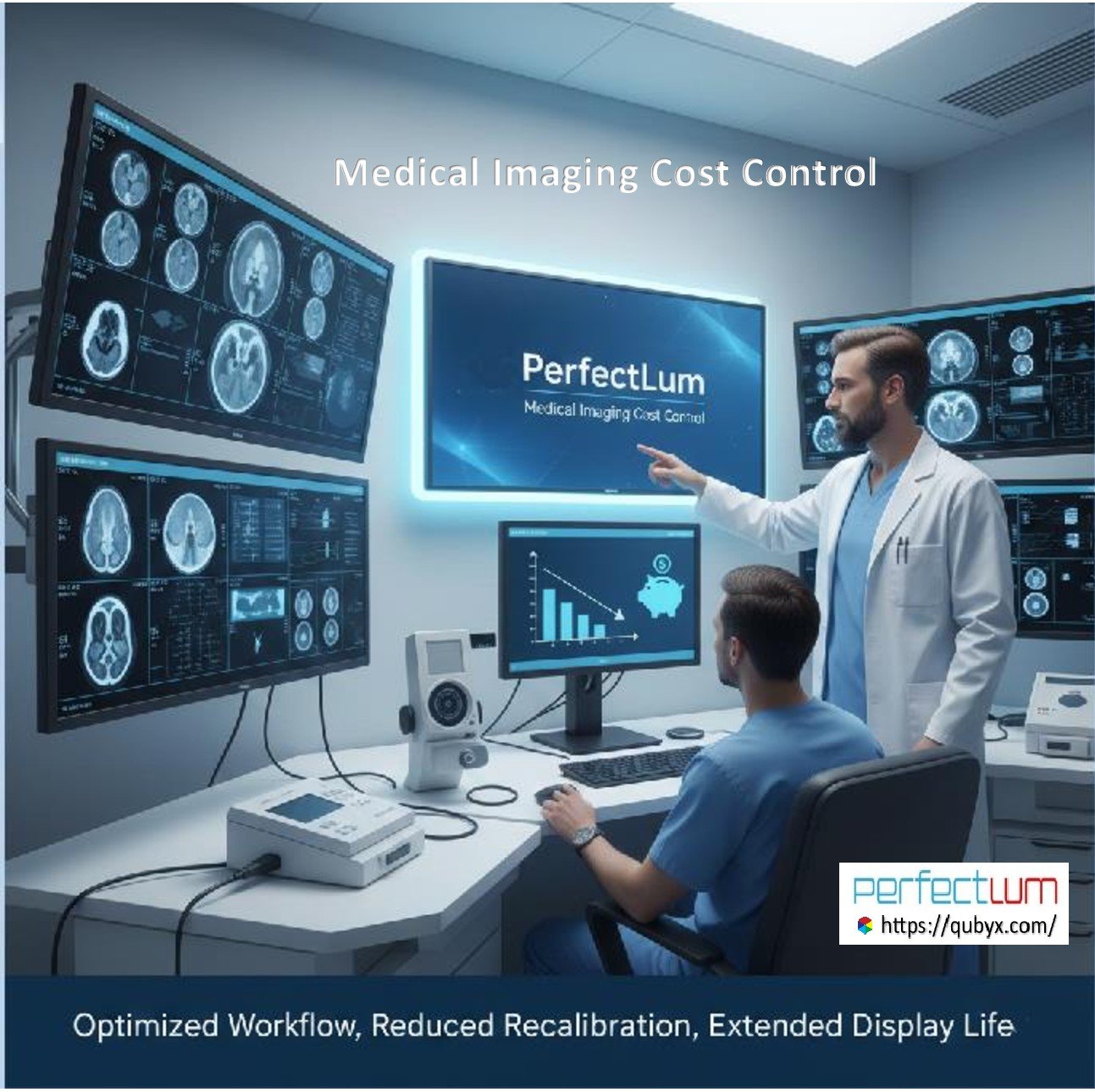
Medical Imaging Cost Control with PerfectLum Display Calibration Healthcare