
News
- Home
- Radiology QA Workflows in PACS and VNA Environments
Radiology QA Workflows in PACS and VNA Environments
- January 31, 2026
- QUBYX Team
Radiology QA Workflows in PACS and VNA Environments
Why Radiology QA Workflows Matter More Than Ever
Radiology has evolved into a highly distributed, technology-driven discipline. Images are acquired in one location, stored centrally, and interpreted across hospitals, teleradiology hubs, and subspecialty reading groups. In this environment, radiology QA workflows are no longer optional technical checks—they are foundational to diagnostic accuracy, clinical trust, and regulatory confidence.
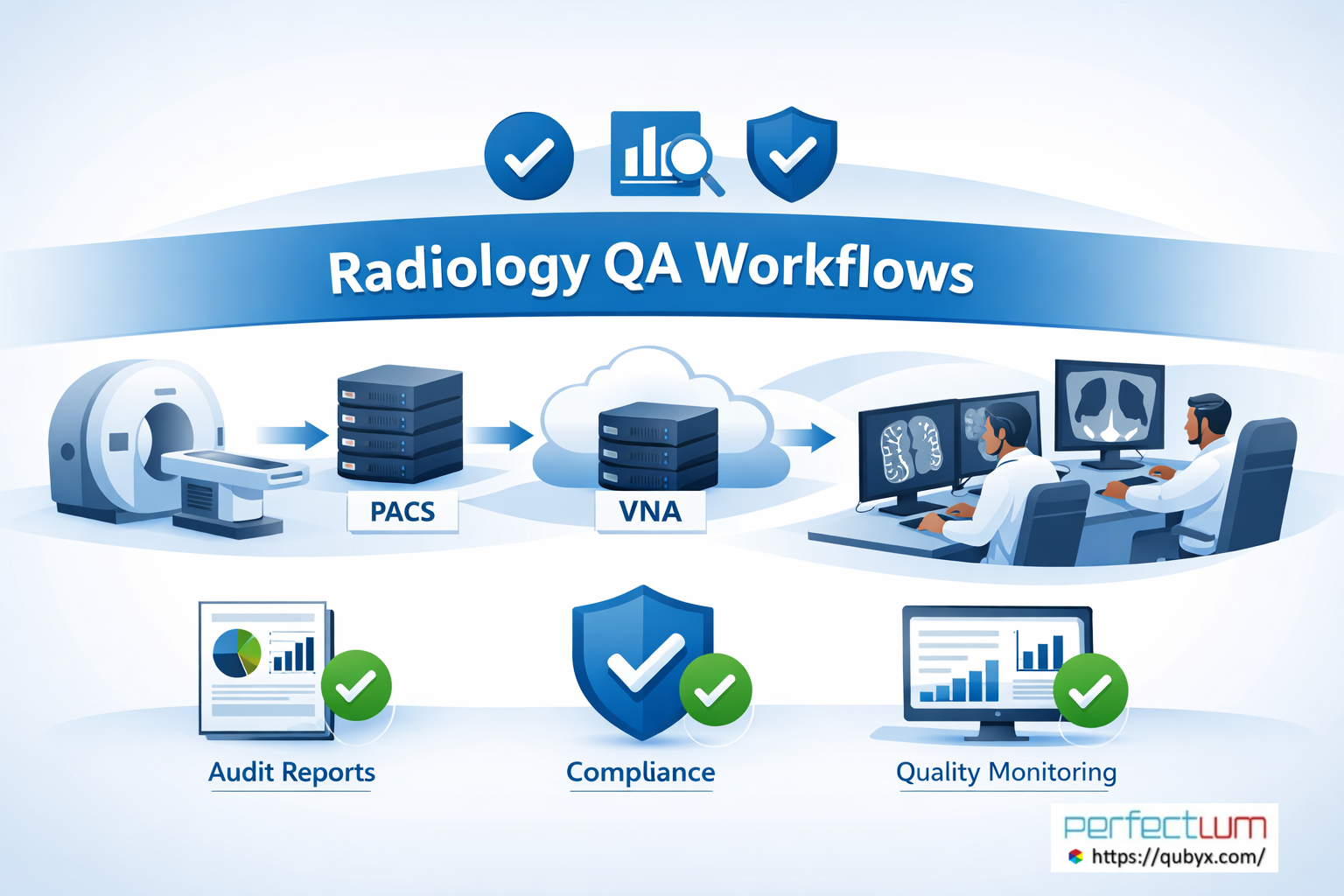
Within PACS and VNA environments, radiology QA workflows ensure that images remain consistent, accurate, and defensible from acquisition to interpretation. Without structured QA, even advanced imaging infrastructure can introduce variability that undermines clinical outcomes and audit readiness.
Understanding Radiology QA Workflows
Radiology QA workflows refer to the structured processes used to maintain, verify, and document image quality across the radiology ecosystem. These workflows go beyond isolated quality control tests and instead provide continuous oversight across systems, users, and locations.
Core objectives of radiology QA workflows include:
-
Ensuring consistent image presentation for diagnosis
-
Reducing variability across displays and reading environments
-
Supporting regulatory and accreditation requirements
-
Providing traceable documentation for audits
-
Protecting diagnostic confidence in distributed workflows
In PACS and VNA environments, QA workflows must scale across enterprise systems while remaining operationally efficient.
The Role of PACS in Radiology QA Workflows
Picture Archiving and Communication Systems (PACS) sit at the center of most radiology operations. They manage image storage, retrieval, and distribution, making them a critical anchor point for radiology QA workflows.
Within PACS, QA workflows typically address:
-
Image integrity during ingestion and retrieval
-
Consistency of image rendering across workstations
-
Alignment between modality output and diagnostic displays
-
Workflow continuity across sites and subspecialties
However, PACS alone does not guarantee image quality. Without defined radiology QA workflows layered on top, PACS environments can silently propagate inconsistencies across users and locations.
The Expanding Importance of VNA in QA Architecture
Vendor Neutral Archives (VNAs) extend imaging beyond radiology, enabling enterprise-wide access to clinical images. As VNAs aggregate data from multiple PACS, modalities, and departments, they introduce new complexity for radiology QA workflows.
In VNA environments, QA workflows must account for:
-
Multi-vendor image sources
-
Diverse clinical use cases beyond radiology
-
Long-term image retention and migration
-
Cross-departmental access and interpretation
Effective radiology QA workflows ensure that images retrieved from a VNA remain diagnostically reliable regardless of origin, age, or viewing location.
Key Components of Radiology QA Workflows in PACS and VNA
1. Image Acquisition Validation
QA workflows begin at acquisition. Ensuring that modalities produce images aligned with clinical protocols reduces downstream variability and supports consistent interpretation.
2. Image Storage and Integrity Checks
Within PACS and VNA systems, radiology QA workflows verify that images are stored without corruption, compression artifacts, or metadata inconsistencies.
3. Display Quality Assurance
Diagnostic accuracy depends on how images are displayed. Radiology QA workflows must include regular display calibration, luminance verification, and consistency checks across reading environments.
4. Workflow Monitoring and Exception Handling
Modern QA workflows track performance over time, flag deviations, and enable proactive intervention before issues impact diagnosis.
5. Documentation and Audit Trails
Audit-ready radiology requires evidence. Structured radiology QA workflows generate logs, reports, and historical records that support internal reviews and external inspections.
Radiology QA Workflows and Diagnostic Consistency
One of the primary goals of radiology QA workflows is diagnostic consistency. When radiologists interpret images across multiple sites or devices, even minor display or workflow variations can influence perception.
Consistent QA workflows help ensure that:
-
The same image appears the same way to every reader
-
Diagnostic decisions are based on clinical findings, not technical artifacts
-
Peer review and double reading are meaningful and reliable
In PACS and VNA environments, where images travel widely, consistency becomes a clinical imperative.
Regulatory and Accreditation Considerations
Healthcare regulators and accreditation bodies increasingly expect documented, repeatable QA processes. Radiology QA workflows support compliance by demonstrating that image quality is actively managed—not assumed.
Well-designed workflows help organizations:
-
Meet accreditation requirements without last-minute preparation
-
Respond confidently to audits and inspections
-
Reduce compliance risk in distributed imaging models
In enterprise PACS and VNA environments, centralized QA workflows simplify governance while maintaining local accountability.
Operational Efficiency Through Structured QA
Contrary to common concerns, robust radiology QA workflows do not slow operations. When designed correctly, they reduce manual effort, minimize reactive troubleshooting, and improve uptime.
Benefits include:
-
Fewer diagnostic interruptions
-
Reduced IT firefighting
-
Predictable QA cycles
-
Clear ownership and accountability
In complex PACS and VNA ecosystems, efficiency depends on visibility—and QA workflows provide that visibility.
Common Challenges in PACS and VNA QA Workflows
Despite their importance, radiology QA workflows often face challenges:
-
Fragmented tools across sites
-
Manual, spreadsheet-based tracking
-
Inconsistent policies between departments
-
Limited visibility into remote environments
Addressing these gaps requires treating radiology QA workflows as a core operational system rather than an occasional technical task.
Best Practices for Radiology QA Workflows
To strengthen radiology QA workflows in PACS and VNA environments, organizations should:
-
Define enterprise-wide QA standards
-
Centralize visibility while supporting local execution
-
Automate routine checks where possible
-
Maintain clear documentation and reporting
-
Review and refine workflows continuously
These practices help ensure that QA scales alongside imaging growth.
The Future of Radiology QA Workflows
As radiology continues to expand through teleradiology, AI-assisted interpretation, and enterprise imaging, radiology QA workflows will become even more critical. Future-ready workflows will emphasize continuous monitoring, interoperability, and audit-ready design by default.
Organizations that invest early in robust QA workflows will be better positioned to maintain diagnostic trust in increasingly complex imaging environments.
PerfectLum, developed by QUBYX LLC
PerfectLum, developed by QUBYX, is designed for radiology teams that need confidence, consistency, and control across their QA workflows. In PACS and VNA environments where images are read across multiple sites and by multiple radiologists, PerfectLum helps ensure that every diagnostic display performs as expected—every day. By simplifying display quality assurance, reducing manual effort, and providing clear, audit-ready reporting, PerfectLum enables organizations to maintain reliable image presentation without disrupting clinical productivity. The result is greater diagnostic confidence for radiologists, lower operational risk for IT teams, and stronger governance for imaging leaders managing enterprise-scale radiology QA workflows.
Conclusion
Radiology QA workflows are the backbone of reliable imaging in PACS and VNA environments. They ensure that images remain consistent, interpretable, and defensible across systems, sites, and time. By embedding structured QA workflows into enterprise imaging strategies, healthcare organizations protect diagnostic quality, operational efficiency, and regulatory confidence—today and into the future.
Start the conversation with our calibration experts today.
In a world where every Pixel accuracy matters, PerfectLum by QUBYX proves that innovation can deliver clinical precision without financial compromise. It’s not just calibration—it’s the democratization of diagnostic imaging.
PerfectLum is Medical Display Calibration & QA Software by QUBYX LLC delivers consistent, audit-ready display performance through standardized calibration, verification, and centralized quality assurance for radiology and teleradiology environments.
Tags:
radiology QA workflows, PACS QA, VNA quality assurance, imaging QA in radiology, diagnostic image consistency, audit-ready radiology, enterprise imaging workflows
About the Author:
Shamsul Islam is a strategy and growth professional focused on regulated B2B technology markets. He supports QUBYX LLC and its medical imaging solutions through product positioning, go-to-market strategy, and end-to-end digital content development, including website, social media, and educational video initiatives aligned with quality, compliance, and governance-driven environments.
Related Posts

- April 12, 2026
- News
- April 8, 2026
- News

- April 6, 2026
- News