
News
- Home
- PerfectLum Display Calibration & QA for Medical Imaging
PerfectLum Display Calibration & QA for Medical Imaging
- January 24, 2026
- Shamsul
PerfectLum Display Calibration & Quality Assurance for Regulated Imaging
Introduction
In medical imaging, diagnostic confidence depends not only on image acquisition and transmission, but also on how images are presented at the point of interpretation. As radiology workflows extend across hospitals, outpatient centers, and home reporting environments, ensuring consistent and verifiable display performance has become a critical operational requirement.
PerfectLum display calibration software addresses this challenge by enabling standardized calibration, verification, and quality assurance (QA) of medical displays across distributed imaging environments. Rather than functioning as a one-time setup utility, PerfectLum supports display performance as a managed, auditable, and repeatable process aligned with modern radiology and teleradiology operations.
This article explains what PerfectLum does, the problems it solves, who it is designed for, and how it fits into regulated imaging ecosystems—without marketing claims or overstatement.
What PerfectLum Does
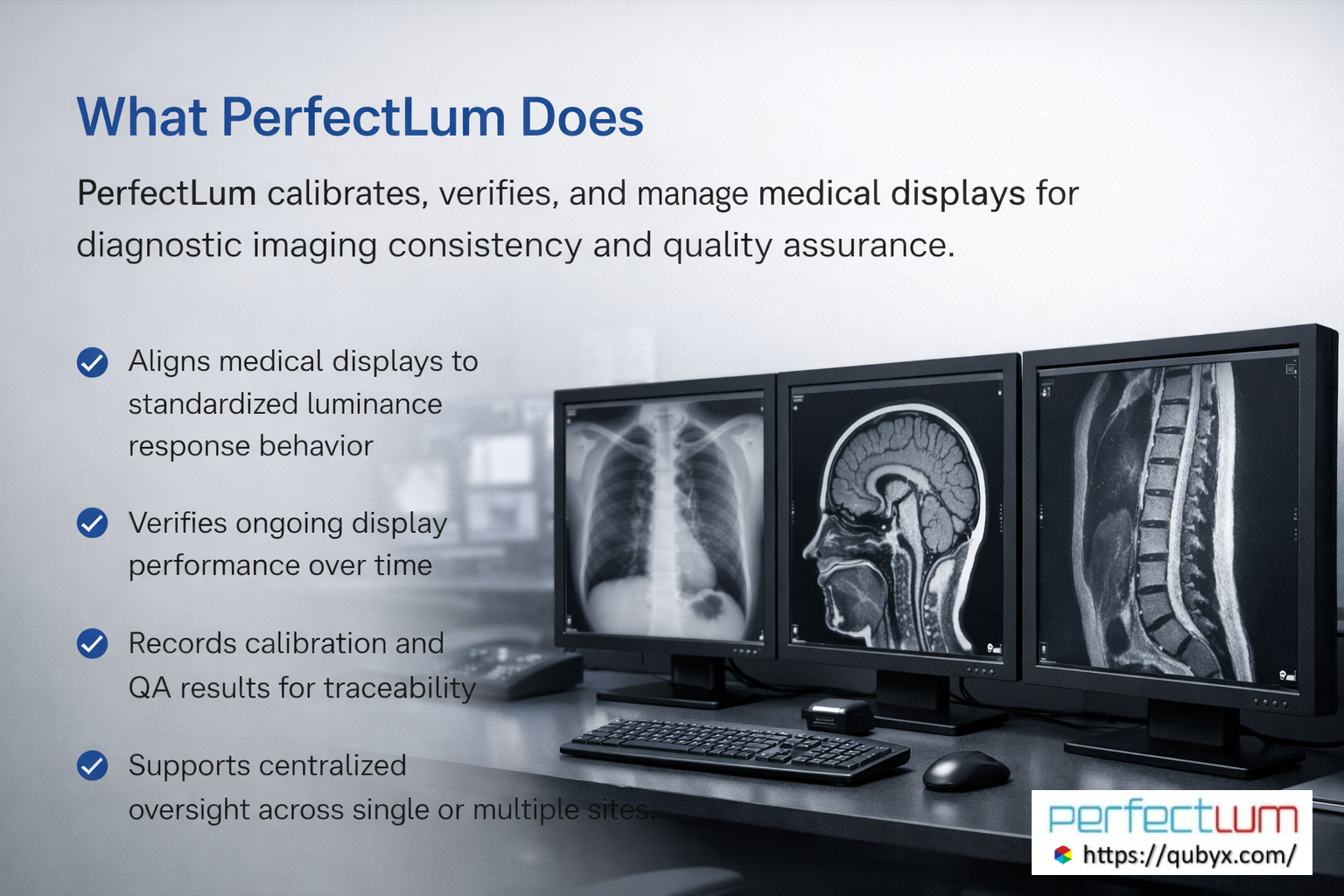
PerfectLum is a software platform designed to calibrate, verify, and manage the performance of medical imaging displays used for diagnostic interpretation.
At a functional level, PerfectLum display calibration software:
-
Aligns medical displays to standardized luminance response behavior
-
Verifies ongoing display performance over time
-
Records calibration and QA results for traceability
-
Supports centralized oversight across single or multiple sites
Unlike consumer or creative calibration tools, PerfectLum is purpose-built for regulated imaging environments, where consistency, documentation, and repeatability matter as much as visual accuracy.
The software operates as part of a continuous QA workflow rather than a manual or ad-hoc adjustment process.
Problems PerfectLum Solves
Display Inconsistency Across Reading Environments
Radiologists increasingly interpret studies across multiple locations, devices, and display models. Without standardized calibration, identical images may appear differently from one workstation to another.
PerfectLum display calibration software reduces this variability by enforcing consistent display behavior across:
-
Primary diagnostic monitors
-
Secondary review displays
-
Remote or home reporting workstations
This consistency supports diagnostic confidence and reduces interpretive variability introduced by uncontrolled display performance.
Audit and Compliance Risk
In regulated imaging environments, the absence of documented display QA introduces audit risk. Many organizations rely on manual logs, spreadsheets, or informal processes that are difficult to verify retrospectively.
PerfectLum addresses this risk by:
-
Automating calibration and verification records
-
Maintaining historical QA logs
-
Supporting traceable, repeatable QA routines
This transforms display quality from an implicit assumption into a verifiable operational control.
Gaps in Remote and Distributed QA
Teleradiology and hybrid reporting models often lack centralized visibility into display performance outside the primary imaging facility.
PerfectLum display calibration software supports remote QA by enabling:
-
Scheduled verification of off-site displays
-
Centralized monitoring of compliance status
-
Consistent QA processes regardless of location
This capability is increasingly critical as radiology networks scale beyond traditional hospital boundaries.
Who PerfectLum Is For
Radiologists and Clinical Leaders
Radiologists depend on consistent image presentation to support accurate interpretation. PerfectLum provides assurance that display performance is aligned with accepted standards across all reading environments.
For clinical leadership, this consistency supports governance, risk management, and quality assurance objectives without adding manual burden.
IT and Clinical Engineering Teams
From an IT perspective, PerfectLum display calibration software introduces structure and control into an area that is often fragmented and reactive.
Key benefits include:
-
Centralized oversight of display QA status
-
Reduced reliance on manual checks
-
Standardized deployment across heterogeneous hardware
This supports scalability and operational efficiency in complex imaging environments.
Imaging Networks and Teleradiology Providers
Large imaging networks and teleradiology providers face unique challenges related to scale, geography, and device diversity.
PerfectLum supports these environments by enabling:
-
Consistent QA policies across multiple sites
-
Centralized reporting for distributed workstations
-
Repeatable onboarding of new displays and users
Standards and Compliance Context
PerfectLum is designed to support alignment with established imaging display standards, without claiming regulatory certification or substituting for institutional governance.
Relevant standards and frameworks include:
-
DICOM Grayscale Standard Display Function (GSDF)
-
Professional society guidance on diagnostic display performance
-
Internal quality management and accreditation requirements
PerfectLum display calibration software provides the technical mechanisms to support compliance efforts, while responsibility for policy and interpretation remains with the organization.
Deployment Models
Single-Site Deployment
In a single imaging facility, PerfectLum can be deployed to:
-
Standardize all diagnostic displays
-
Automate routine calibration and verification
-
Maintain a local audit trail of display QA
This model is suitable for hospitals, clinics, and imaging centers seeking to formalize display quality management.
Multi-Site Deployment
For organizations operating across multiple locations, PerfectLum display calibration software supports:
-
Consistent QA policies across sites
-
Centralized visibility into compliance status
-
Reduced variation introduced by local practices
This is particularly relevant for health systems and regional imaging networks.
Centralized QA for Distributed Environments
In highly distributed or teleradiology-focused models, PerfectLum enables centralized QA oversight while displays remain physically dispersed.
This approach supports:
-
Remote workstation governance
-
Scalable QA processes
-
Unified reporting across the network
Reporting and Audit Readiness
One of the defining features of PerfectLum display calibration software is its focus on documentation and traceability.
The platform supports:
-
Automated QA reports
-
Historical calibration records
-
Evidence suitable for internal review or external audit
Rather than treating reporting as an afterthought, PerfectLum embeds audit readiness directly into routine QA workflows.
This approach aligns with modern expectations for transparency, accountability, and continuous quality improvement.
Integration Context: PACS and VNA Environments
PerfectLum operates within the broader imaging IT ecosystem, complementing systems such as:
-
Picture Archiving and Communication Systems (PACS)
-
Vendor Neutral Archives (VNA)
-
Radiology Information Systems (RIS)
While PerfectLum does not replace these platforms, it addresses a critical gap: display performance at the point of diagnosis.
By integrating into existing workflows, PerfectLum display calibration software helps ensure that image fidelity is preserved through the final stage of the imaging lifecycle.
Why Product-Centric QA Matters in Modern Imaging
As imaging operations grow more complex, quality assurance can no longer rely on informal practices or assumptions. Display performance must be measured, verified, and documented with the same rigor applied to other elements of the imaging chain.
PerfectLum reflects a broader shift toward product-centric QA solutions that:
-
Scale with organizational growth
-
Support distributed work models
-
Provide defensible quality evidence
This shift is driven not by marketing trends, but by operational necessity.
Conclusion
PerfectLum display calibration software provides a structured, standards-aligned approach to managing display quality in regulated imaging environments. By addressing display inconsistency, audit risk, and remote QA challenges, it supports radiology organizations seeking reliability, transparency, and scalability.
Rather than promising outcomes, PerfectLum focuses on process, verification, and documentation—the foundations of trustworthy medical imaging operations.
Developed by QUBYX, PerfectLum is positioned as an enabling technology within modern radiology and teleradiology ecosystems.
Start the conversation with our calibration experts today.
In a world where every Pixel accuracy matters, PerfectLum by QUBYX proves that innovation can deliver clinical precision without financial compromise. It’s not just calibration—it’s the democratization of diagnostic imaging.
PerfectLum is Medical Display Calibration & QA Software by QUBYX LLC delivers consistent, audit-ready display performance through standardized calibration, verification, and centralized quality assurance for radiology and teleradiology environments.
Tags:
PerfectLum display calibration software, medical display calibration, imaging quality assurance software, radiology display QA, DICOM GSDF compliance, teleradiology display consistency, audit-ready imaging QA, PACS display integration
About the Author:
Shamsul Islam is a strategy and growth professional focused on regulated B2B technology markets. He supports QUBYX LLC and its medical imaging solutions through product positioning, go-to-market strategy, and end-to-end digital content development, including website, social media, and educational video initiatives aligned with quality, compliance, and governance-driven environments.
Related Posts
- January 25, 2026
- News
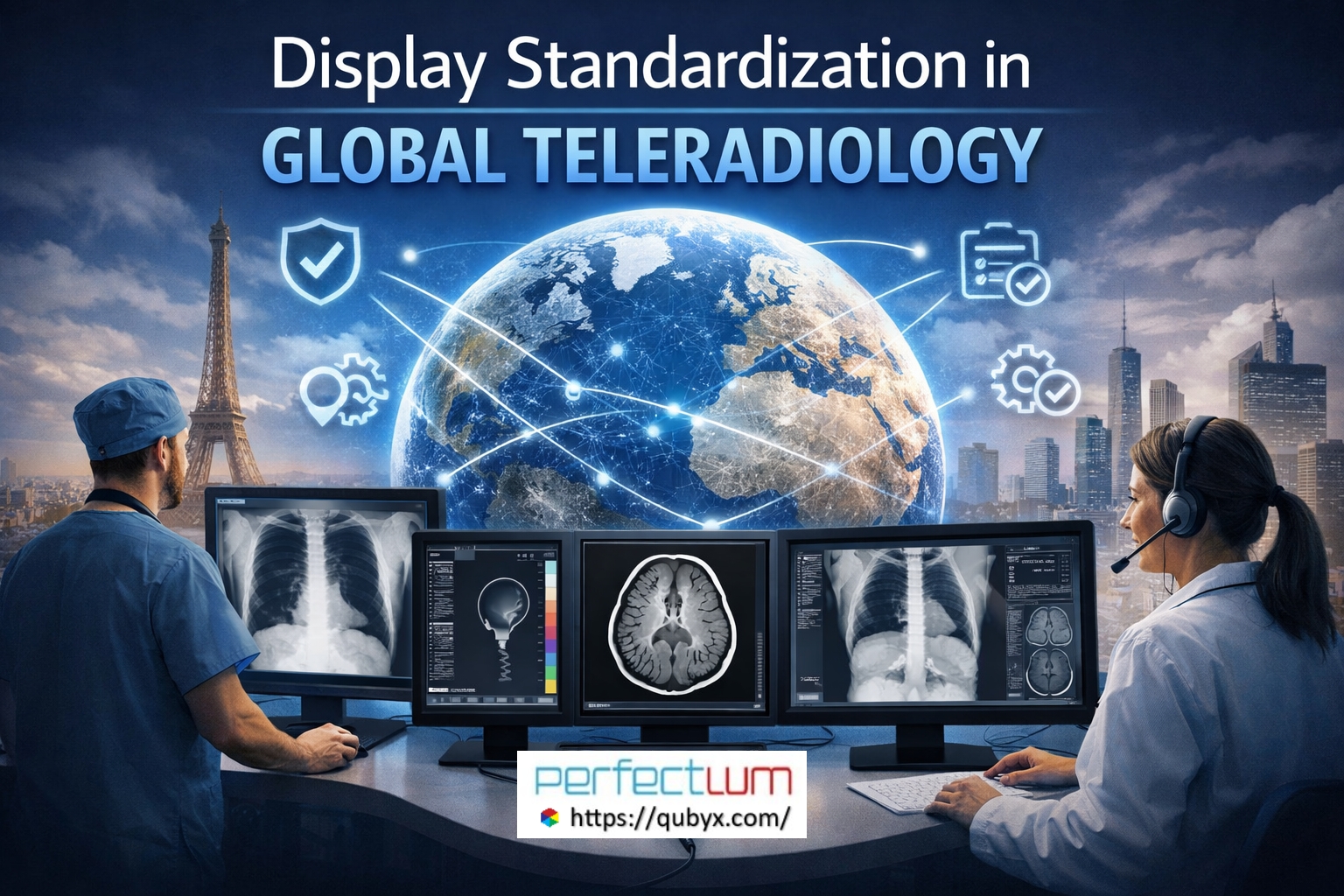
Display Standardization in Global Teleradiology Global teleradiology has transformed
- January 24, 2026
- News
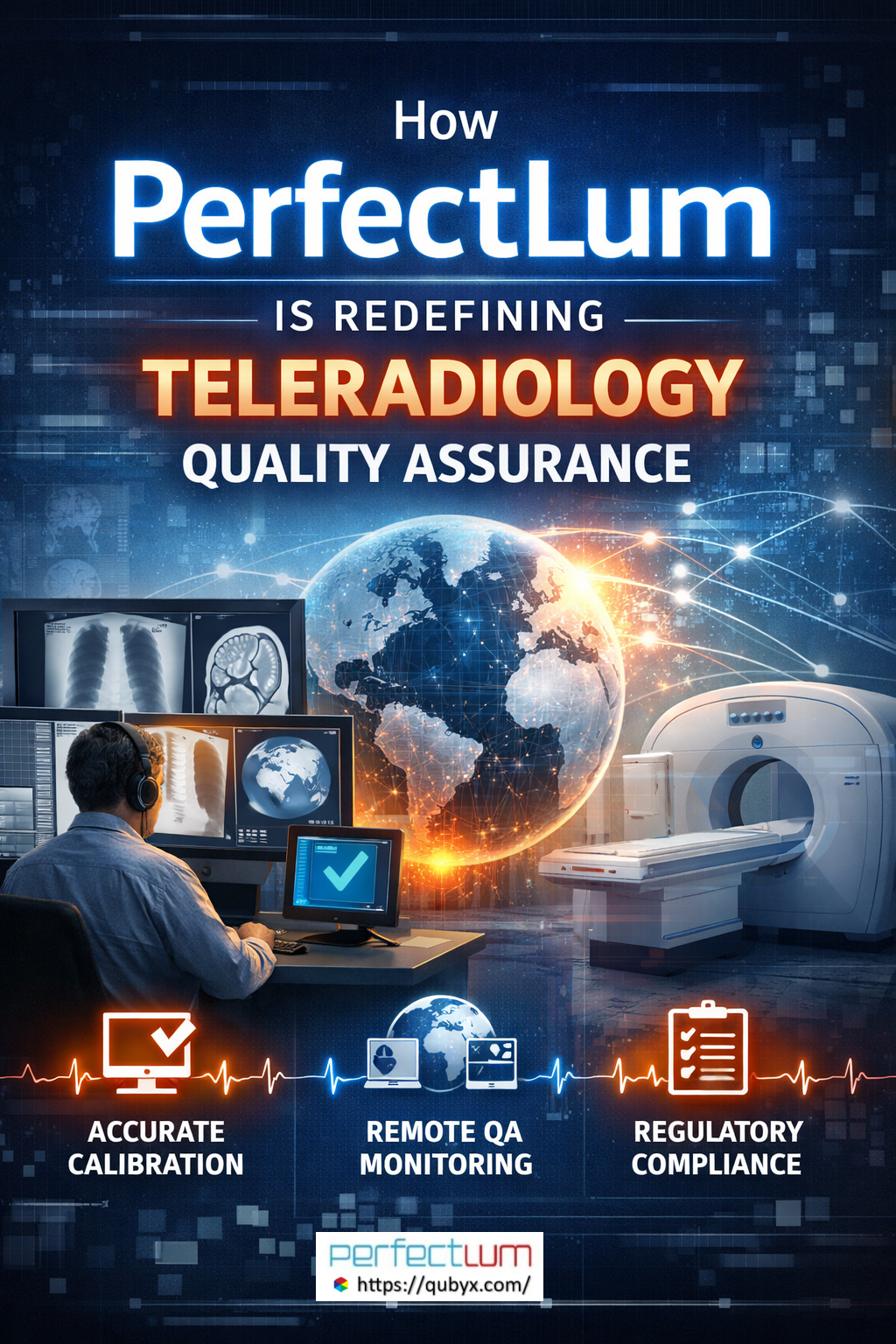
How PerfectLum Is Redefining Teleradiology Quality Assurance Why Quality
- January 24, 2026
- News
PerfectLum Display Calibration & Quality Assurance for Regulated Imaging