
News
- Home
- How Hospitals Get 100% Diagnostic Accuracy With PerfectLum
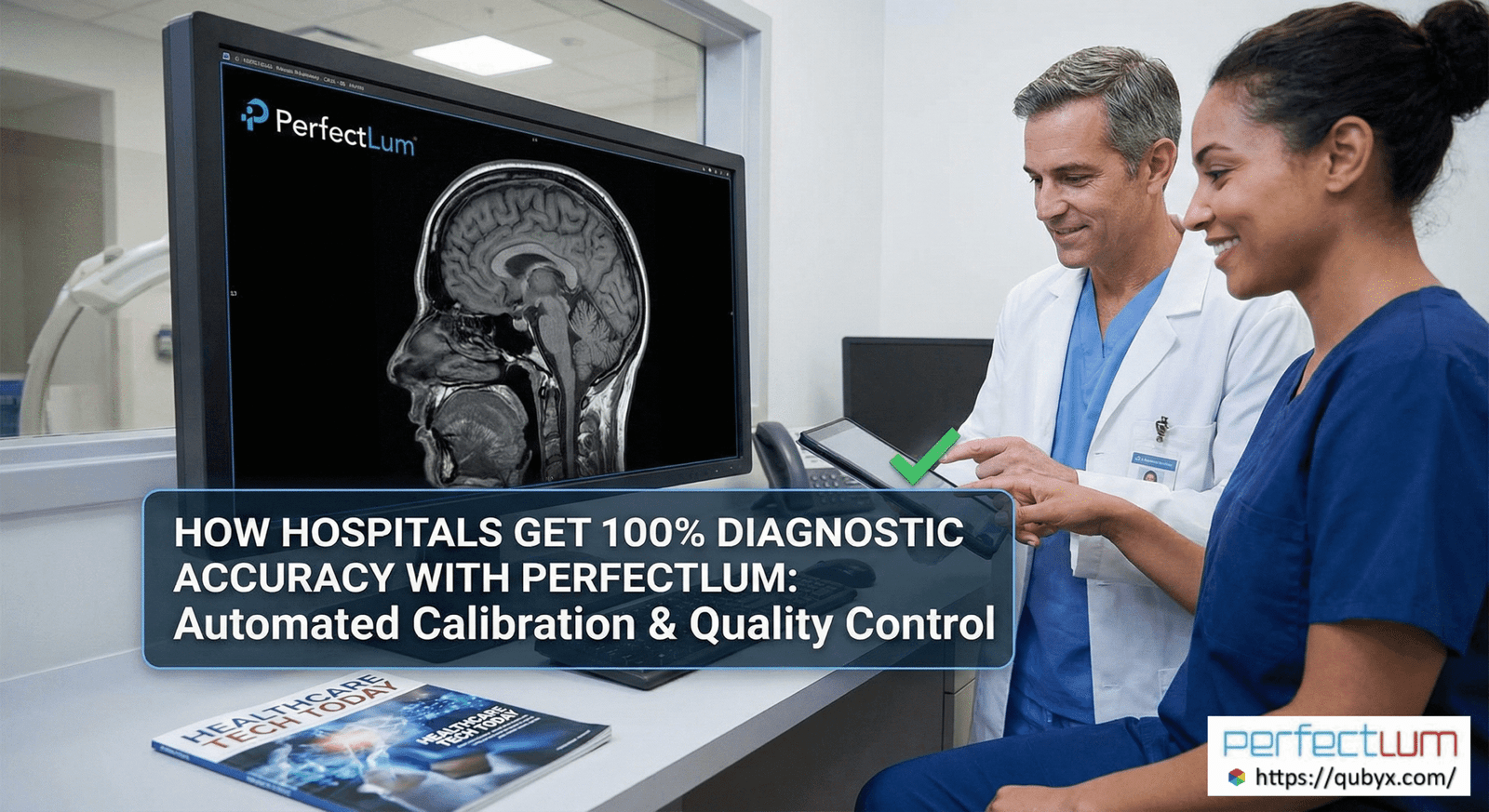
How Hospitals Get 100% Diagnostic Accuracy With PerfectLum
- November 22, 2025
- Sam Lee
How Hospitals Get 100% Diagnostic Accuracy With PerfectLum
Why Display QA Is a Silent Hero in Diagnostic Accuracy
In modern medicine, healthcare relies heavily on digital imaging—radiology, mammography, CT, MRI, pathology, dermatology, and even dental diagnostics. Yet many hospitals still overlook one of the simplest ways to achieve diagnostic accuracy: routine display calibration and QA.
Studies from the ACR, AAPM, and WHO show that up to 30% of diagnostic discrepancies are caused not by radiologist skill or imaging technique, but by poor display performance:
-
Uncalibrated brightness
-
Incorrect grayscale rendering
-
Color deviation
-
Loss of subtle contrast
-
Drift over time
The result? Missed micro-calcifications, unnoticed lesions, incorrect measurements, and inconsistent interpretations between workstations.
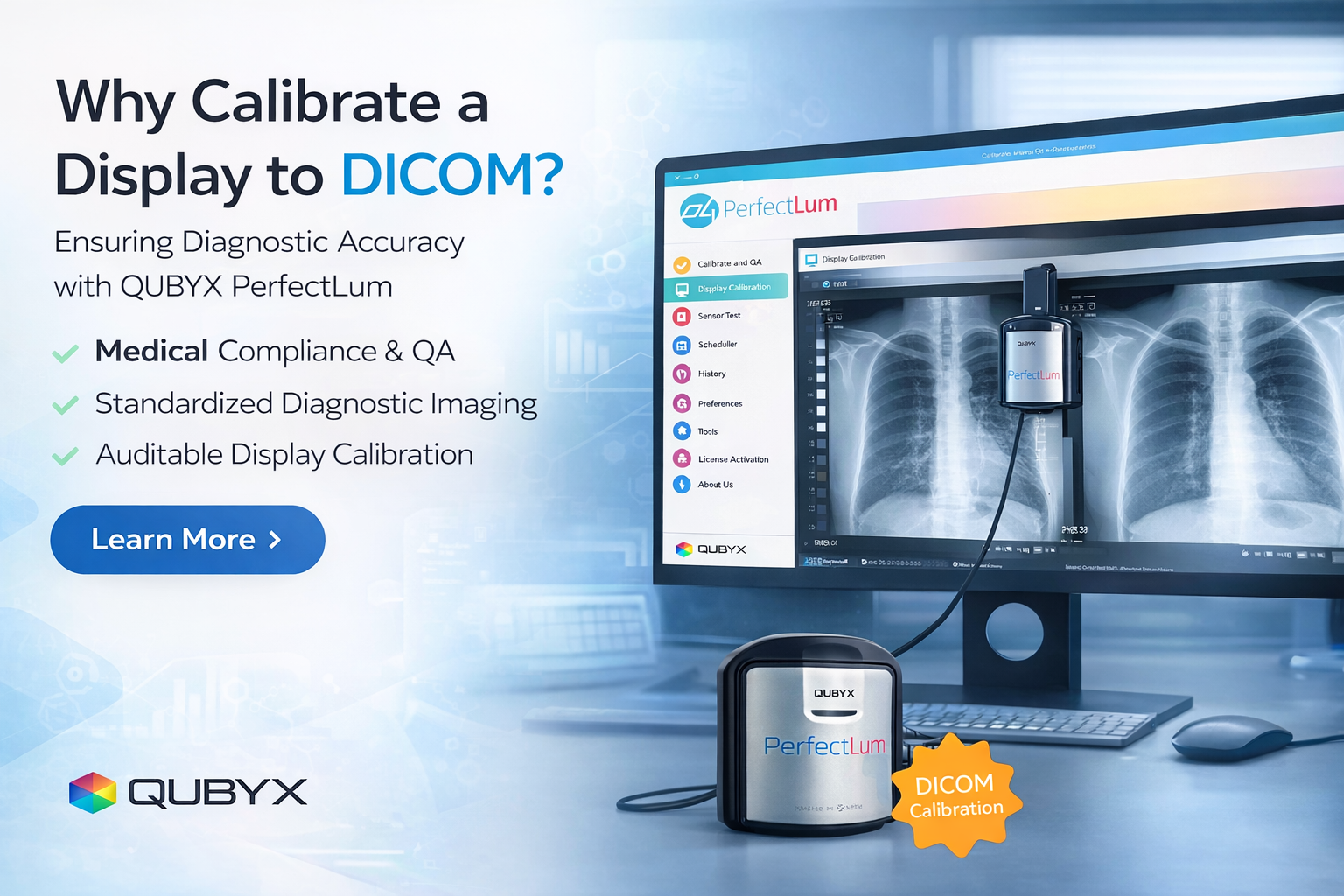
This is where PerfectLum becomes indispensable—enforcing routine QA, achieving DICOM GSDF compliance, and ensuring diagnostic accuracy on a trusted and standardized visual foundation.
The Real Problem: Medical Displays Drift Faster Than You Think
Every medical monitor—no matter how expensive—drifts.
Brightness falls.
Contrast shifts.
Uniformity breaks.
Color channels degrade.
Without routine QA:
-
A 500 cd/m² monitor may drop to 380 cd/m²
-
Subtle grayscale levels fail GSDF
-
Lesions under 5 mm become less visible
-
Radiologists unknowingly compensate with their eyes
This silent degradation can take months, not years. That’s why accreditation standards (AAPM TG18, TG270, DIN 6868-157, IEC 62563-1) require regular QA and calibration.
Yet many hospitals still do QA once a year—or never.
How Routine Display QA Achieve Diagnostic Accuracy by 100%
1. Restores True Visibility of Subtle Features
Micro-calcifications, ground-glass opacities, vessel narrowing, and early-stage tumors rely on precise grayscale visibility.
PerfectLum applies the DICOM GSDF curve, ensuring that each of the 256 luminance levels is perceptible, restoring true diagnostic contrast.
2. Ensures Consistency Between Radiologists
Without QA:
-
Radiologist A sees a lesion
-
Radiologist B sees nothing
-
Radiologist C sees a different density
Quality assurance eliminates variability across locations, floors, or entire hospital networks.
PerfectLum provides:
-
Uniform compliance
-
Centralized device management
-
Automatic QA reminders
-
QA report export for compliance audits
This means every radiologist sees the same image in the same quality—eliminating human bias caused by inconsistent displays.
3. Stops Monitor Aging From Causing Misdiagnosis
Aging backlights cause:
-
Dimmer screens
-
Yellow-tinted whites
-
Poor black levels
-
Loss of shadow details
PerfectLum detects drift early and recalibrates the display before misdiagnosis can occur.
4. Accelerates Accreditation Compliance
PerfectLum simplifies compliance with:
-
AAPM TG18
-
AAPM TG270
-
DIN 6868-157
-
DICOM Part 14
-
IEC 62563-1
Reports are automatically generated and stored—no more manual paperwork.
Accreditation audits become painless.
5. Reduces Workload for PACS and Imaging IT Teams and Achieve Diagnostic Accuracy
Manual QA takes hours.
Automated QA takes seconds.
PerfectLum offers:
-
Scheduled calibrations
-
Remote control
-
Logging & reporting
-
LAN-based multi-display management
This reduces IT burden and ensures uninterrupted QA coverage with diagnostic accuracy.
6. Improves Hospital ROI and Monitor Lifespan
Routine calibration achieve diagnostic accuracy and reduces:
-
Premature monitor replacements
-
Costly service calls
-
The need for frequent re-calibration hardware
It can extend medical monitor lifespan by up to 40%.
Step-by-Step: How PerfectLum Enables Routine QA Workflow
✔ Step 1: Initial Acceptance Test (DIN 6868-157 / IEC 62563-1)
Performed when installing new displays.
PerfectLum performs:
-
Luminance response test
-
Uniformity test
-
Color accuracy test
-
Spatial resolution test
-
Ambient light test
✔ Step 2: Weekly & Monthly Quick QA Tests
PerfectLum QuickCheck validates diagnostic accuracy:
-
Luminance deviation
-
Geometric distortion
-
SMPTE/Full Field test patterns
-
Ambient light conditions
Takes under 60 seconds.
✔ Step 3: Full Calibration (Monthly or Quarterly)
Using supported colorimeters, PerfectLum adjusts to achieve diagnostic accuracy:
-
Gamma
-
Grayscale
-
White point
-
Luminance output
-
Uniformity mapping
Ensures complete drift correction.
✔ Step 4: Annual Deep QA Audit
Generates complete documentation for accreditation and compliance.
Reports export in:
-
PDF
-
XML
-
Hospital QA formats
Case Study Example: Reducing Missed Lesions in Mammography
A mammography clinic running older displays saw:
-
28% failure in grayscale rendering
-
17% reduction in visibility of tiny calcifications
-
Multiple cases of late-stage cancer diagnosed too late
After implementing PerfectLum:
-
GSDF compliance reached 100%
-
Subtle lesions reappeared
-
Radiologists reported “dramatically improved visibility”
-
Diagnostic discrepancies dropped significantly and achieved diagnostic accuracy
This is the real-world power of display QA.
Conclusion: Display QA Isn’t Optional — It’s Patient Safety
Hospitals invest millions in scanners, PACS, and RIS systems…
But one uncalibrated display can break the entire diagnostic chain.
PerfectLum provides 100% diagnostic accuracy:
-
Routine automated QA
-
True DICOM GSDF compliance
-
Fleet-wide display standardization
-
Reduced diagnostic errors
- 100% diagnostic accuracy
-
Improved radiology performance
-
Better patient outcomes
Routine display QA is not just a technical process—it’s a direct investment in patient safety and diagnostic excellence.
In a world where every Pixel accuracy matters, PerfectLum by QUBYX proves that innovation can deliver clinical precision without financial compromise. It’s not just calibration—it’s the democratization of diagnostic imaging.
To secure Medical Display Quality Assurance with precision while reducing the recurring costs of proprietary hardware, the answer is clear: transition to a Calibration Software platform like QUBYX OS Tools (Free) and PerfectLum today. Now, you easily pay less for Radiology.
Tags:
diagnostic accuracy, display calibration, medical monitor QA, GSDF, PerfectLum, radiology errors, QA workflow, QUBYX,
Related Posts
- February 24, 2026
- News
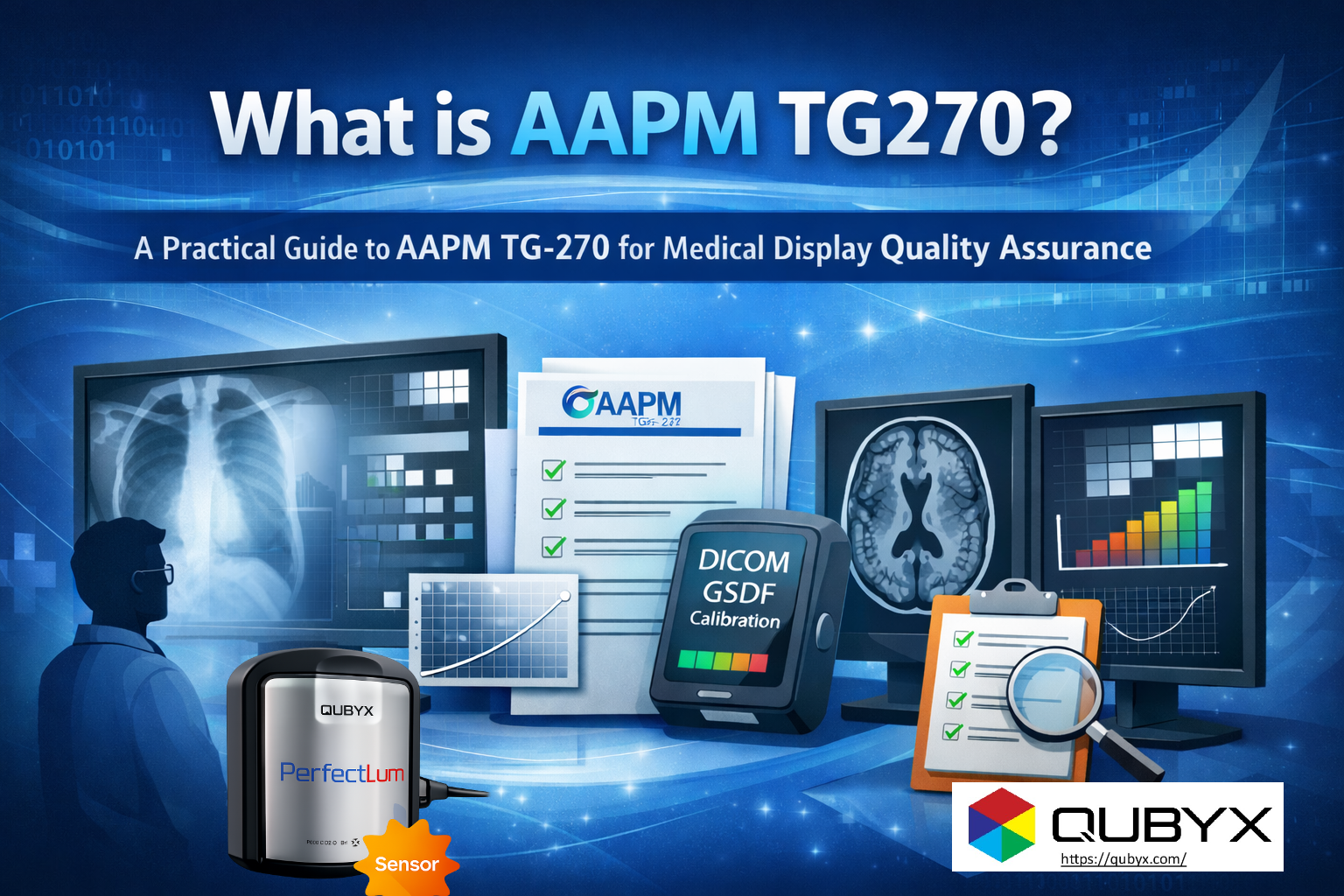
What is AAPM TG270? A Practical Guide to AAPM TG-270
- February 24, 2026
- News
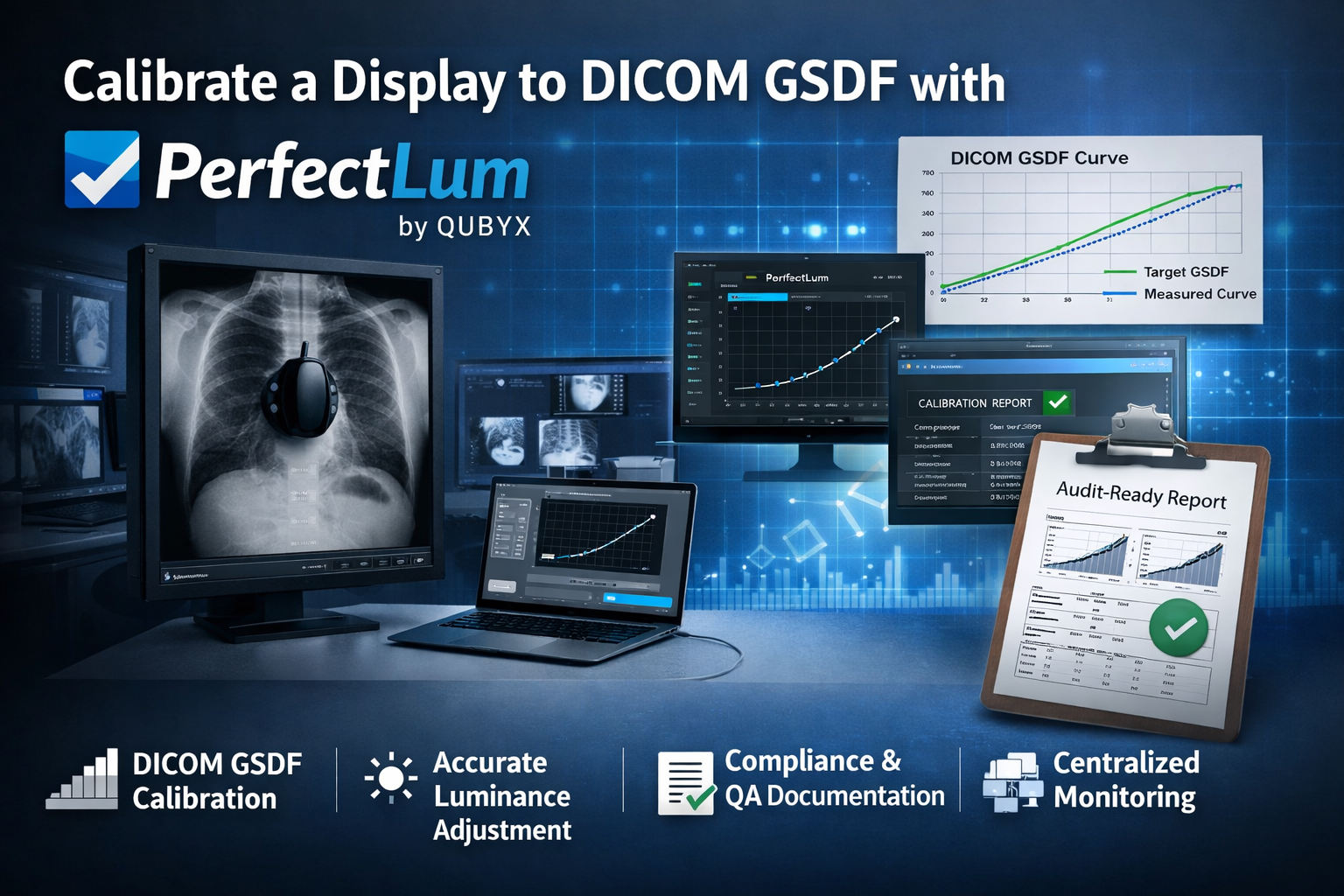
How to Calibrate a Display to DICOM GSDF with PerfectLum
- February 23, 2026
- News
Why Calibrate a Display to DICOM? And the Role