
News
- Home
- Core Capabilities of Display Calibration and QA Management
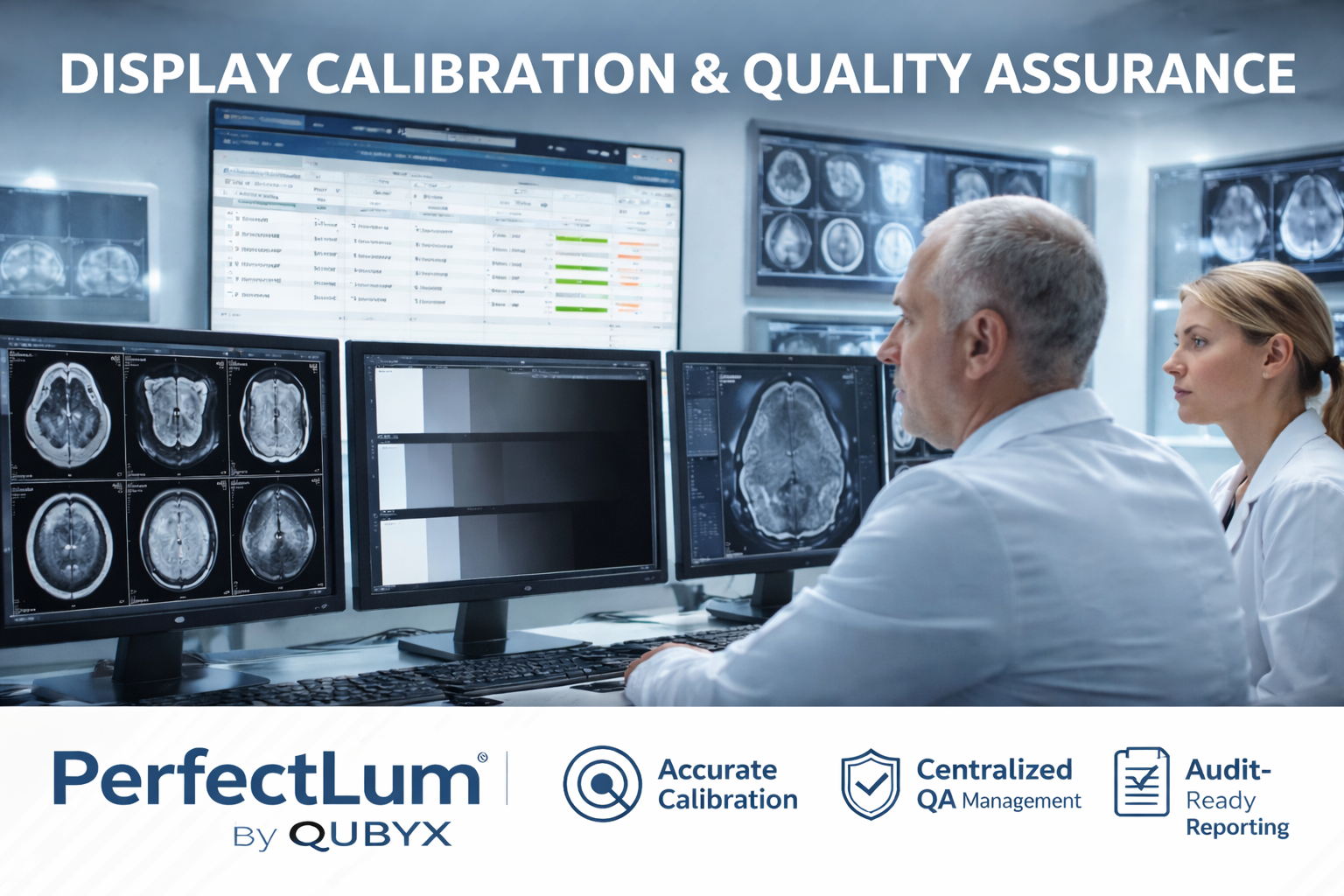
Core Capabilities of Display Calibration and QA Management
- January 28, 2026
- QUBYX Team
Core Capabilities of Display Calibration and QA Management
Display Calibration and QA Management have become foundational requirements in modern imaging environments. As radiology and clinical imaging workflows expand across sites, devices, and reading locations, the ability to maintain consistent visual performance is no longer optional. Diagnostic confidence, operational integrity, and regulatory preparedness all depend on how reliably displays perform over time.
This article provides a comprehensive, standards-aligned examination of the core capabilities of display calibration and QA management, focusing on how modern systems—such as PerfectLum within the QUBYX imaging quality ecosystem—support technical consistency, process control, and audit-ready governance without making clinical claims.
H2. Why Display Calibration and Quality Assurance Matter
Medical images are only as reliable as the displays used to interpret them. Even when acquisition systems and PACS workflows are optimized, variability at the display level can introduce inconsistency that undermines interpretation.
Key risks without robust display calibration and QA management include:
-
Inconsistent luminance and contrast across workstations
-
Grayscale non-linearity affecting subtle detail visibility
-
Undetected display drift over time
-
Manual, non-repeatable QA processes
-
Insufficient documentation for audits or internal review
A structured display calibration and QA management framework addresses these risks by shifting quality from a reactive task to a controlled, repeatable process.
Accurate Calibration of Diagnostic and Clinical Displays
Purpose-Driven Calibration
At the core of any display calibration and QA management system is accurate calibration. This ensures that diagnostic and clinical displays operate within defined luminance and grayscale parameters appropriate for imaging use.
Calibration capabilities focus on:
-
Establishing consistent target luminance levels
-
Maintaining predictable grayscale response behavior
-
Reducing inter-display variability across workstations
Rather than subjective adjustment, calibration relies on objective measurement and defined performance targets.
Consistent Luminance and Grayscale Response
Consistent luminance output and grayscale behavior are critical for reliable image presentation. Effective display calibration and quality assurance systems support:
-
Controlled luminance response curves
-
Repeatable grayscale mapping
-
Stability across different display models and environments
This consistency enables comparable image appearance regardless of where or when images are reviewed.
Repeatable Calibration Workflows Across Workstations
Standardized Processes, Reduced Variability
Repeatability is a defining characteristic of mature display calibration and QA management programs. Systems like PerfectLum emphasize workflow consistency by:
-
Applying the same calibration logic across devices
-
Reducing reliance on manual intervention
-
Supporting predictable outcomes over time
Repeatable workflows minimize human variability and ensure that calibration results can be reproduced during subsequent cycles.
Scalability from Single Workstations to Networks
Whether deployed on a single diagnostic workstation or across a distributed imaging network, repeatable calibration workflows allow organizations to scale without redesigning processes. This scalability is essential for growing radiology groups and enterprise imaging environments.
Quality Assurance and Verification Capabilities
Scheduled QA Checks for Calibration Stability
Calibration alone is insufficient without ongoing verification. display calibration and QA management systems incorporate scheduled QA checks to:
-
Confirm calibration stability
-
Identify deviations from expected performance
-
Provide early warning of potential issues
These checks transform quality assurance into a continuous process rather than an occasional task.
Objective Verification Against Defined Targets
Effective quality assurance depends on objective criteria. Verification processes compare measured performance against predefined targets, enabling:
-
Transparent pass/fail outcomes
-
Consistent interpretation of results
-
Clear thresholds for corrective action
This objectivity supports both technical confidence and governance oversight.
Early Detection of Display Drift or Degradation
Displays naturally change over time. Without monitoring, this drift may go unnoticed until performance degrades significantly. Display calibration and quality assurance systems support early detection by:
-
Tracking performance trends
-
Identifying gradual deviations
-
Enabling proactive maintenance or replacement
Early detection reduces operational risk and avoids sudden quality failures.
Centralized QA Management for Multi-Site Environments
Optional Server-Based Deployment
As imaging operations become more distributed, centralized QA management becomes increasingly valuable. Server-based deployment options support:
-
Multi-site calibration and QA coordination
-
Centralized scheduling of tasks
-
Consolidated visibility across locations
This approach enables organizations to manage quality at scale without imposing additional local complexity.
Central Scheduling, Visibility, and Reporting
Centralized display calibration and quality assurance systems provide:
-
Unified scheduling of calibration and QA activities
-
Real-time visibility into system status
-
Aggregated reporting across departments or sites
These capabilities allow technical teams and management to maintain situational awareness without manual data collection.
Governance-Level Oversight Across Reading Locations
For organizations operating across multiple reading locations, governance-level oversight is essential. Centralized QA management supports:
-
Policy-driven quality control
-
Consistent enforcement of standards
-
Clear accountability structures
This oversight ensures that display performance aligns with organizational expectations regardless of geography.
Audit-Ready Reporting and Documentation
Automatically Generated Calibration and QA Records
Audit-ready reporting is a critical outcome of mature display calibration and QA management systems. Automated record generation ensures that:
-
Calibration activities are consistently documented
-
QA checks are logged without manual effort
-
Historical data is preserved accurately
Automation reduces administrative burden while improving reliability.
H3. Traceable History for Compliance and Review
Traceability is essential in regulated imaging environments. Robust reporting provides:
-
Time-stamped records of calibration and QA events
-
Clear linkage between actions and outcomes
-
Historical visibility for internal review or external audits
This traceability supports accountability without introducing unnecessary complexity.
Clear Documentation for Regulated Imaging Environments
Rather than making clinical claims, systems like PerfectLum focus on technical documentation that demonstrates:
-
Measurement transparency
-
Process control
-
Consistency of execution
Such documentation aligns with the expectations of regulated environments while remaining firmly within a technical scope.
Standards-Aligned by Design
Alignment Without Overclaiming
PerfectLum is designed to align with widely recognized imaging display principles without asserting clinical outcomes. This design philosophy emphasizes:
-
Technical consistency
-
Objective measurement
-
Transparent workflows
By avoiding overclaiming, the system supports environments where standardized visual behavior is required while respecting regulatory boundaries.
Supporting Standardized Visual Behavior
Standards-aligned design ensures that display calibration and QA management processes contribute to:
-
Predictable image presentation
-
Reduced variability across systems
-
Confidence in technical consistency
This alignment is particularly important in distributed and high-volume imaging environments.
Deployment Flexibility Across Operational Models
Single Workstation Calibration
For smaller environments, display calibration and QA management can be deployed at the individual workstation level, supporting:
-
Local control
-
Minimal infrastructure requirements
-
Direct measurement and verification
Department-Level Deployment
Department-level deployment enables shared governance and standardized workflows within a single clinical or imaging department.
Enterprise or Network-Wide QA Management
At scale, enterprise deployment supports:
-
Multi-site coordination
-
Centralized governance
-
Uniform quality expectations
Centralized Server-Based Governance
Server-based governance models allow organizations to scale quality assurance without altering established workflows, ensuring continuity as operations grow.
Part of the QUBYX Imaging Quality Ecosystem
Integrated Measurement Hardware Support
PerfectLum operates within a broader ecosystem that includes support for measurement hardware, ensuring accurate and repeatable data collection.
System-Level Calibration Tools
System-level tools enable consistent application of calibration logic across devices, reinforcing standardization.
Reference-Accurate Viewing Utilities
Reference-accurate viewing utilities complete the loop by supporting reliable image review following calibration and verification.
Together, these components form a closed-loop approach to display quality—from calibration to verification to review—supporting long-term consistency and governance.
Building Sustainable Display Calibration and QA Management Programs
Sustainable display calibration and quality assurance programs are built on:
-
Accurate, repeatable calibration
-
Continuous verification
-
Centralized management where appropriate
-
Audit-ready documentation
-
Standards-aligned design
By focusing on technical consistency and process control rather than clinical claims, organizations can build imaging quality infrastructures that scale with confidence and withstand regulatory scrutiny.
Start the conversation with our calibration experts today.
In a world where every Pixel accuracy matters, PerfectLum by QUBYX proves that innovation can deliver clinical precision without financial compromise. It’s not just calibration—it’s the democratization of diagnostic imaging.
PerfectLum is Medical Display Calibration & QA Software by QUBYX LLC delivers consistent, audit-ready display performance through standardized calibration, verification, and centralized quality assurance for radiology and teleradiology environments.
Tags:
display calibration and QA management, display calibration and quality assurance, diagnostic display calibration, imaging quality assurance software, centralized QA management, audit-ready calibration reporting, luminance consistency, grayscale verification, regulated imaging environments
About the Author:
Shamsul Islam is a strategy and growth professional focused on regulated B2B technology markets. He supports QUBYX LLC and its medical imaging solutions through product positioning, go-to-market strategy, and end-to-end digital content development, including website, social media, and educational video initiatives aligned with quality, compliance, and governance-driven environments.
Related Posts
- April 12, 2026
- News
- April 8, 2026
- News

- April 6, 2026
- News