
News
- Home
- Centralized QA Management for Multi-Site Imaging Networks
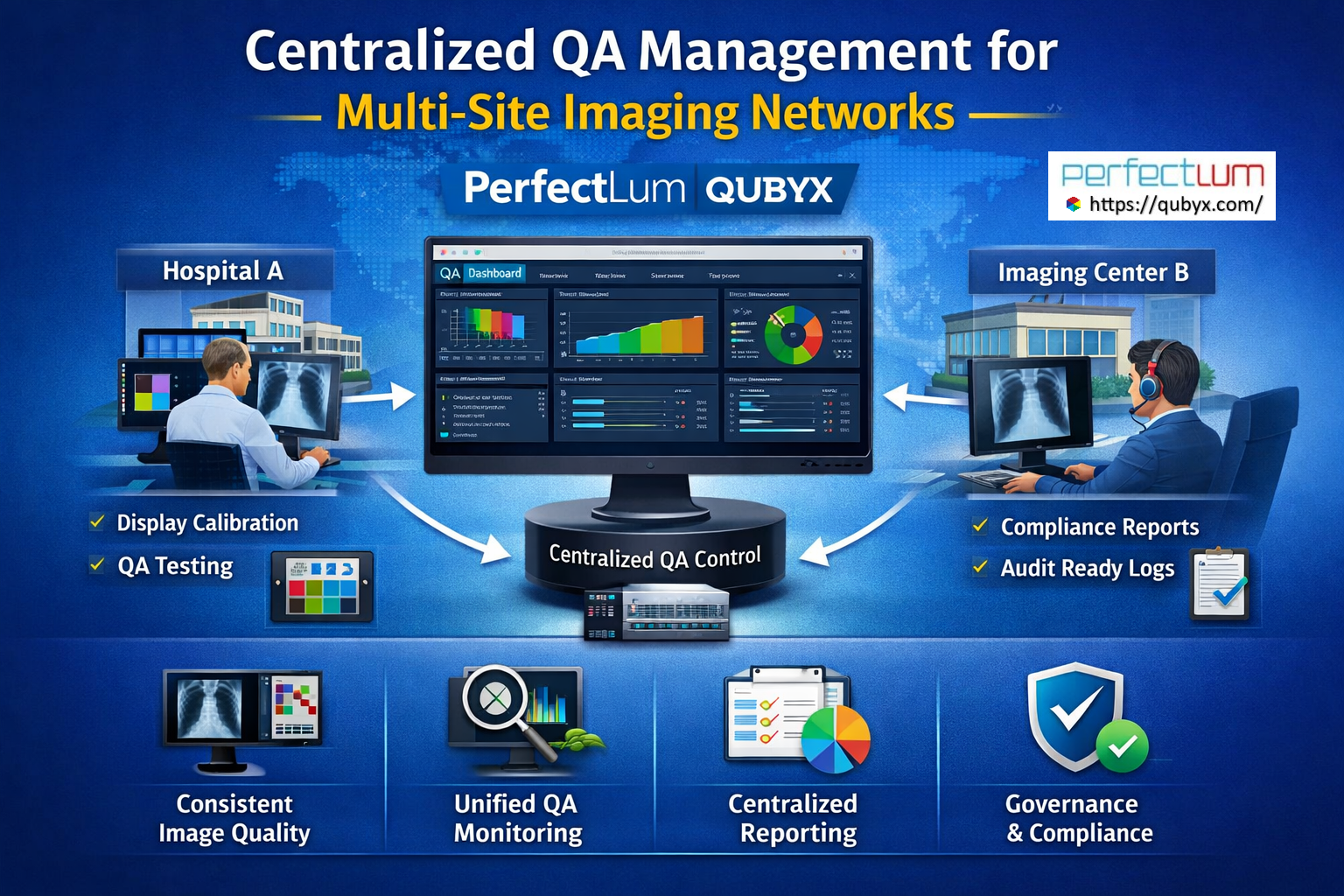
Centralized QA Management for Multi-Site Imaging Networks
- January 31, 2026
- QUBYX Team
Centralized QA Management for Multi-Site Imaging Networks
As radiology and diagnostic imaging expand across hospitals, clinics, and remote reading locations, maintaining consistent image quality has become increasingly complex. Multi-site imaging networks now operate across different geographies, technologies, and operational standards. In this environment, Centralized QA Management is no longer optional—it is a structural requirement for consistency, accountability, and regulatory confidence.
Centralized QA management provides a unified framework to oversee imaging quality across all locations, ensuring that diagnostic images are presented consistently regardless of where they are acquired or interpreted. This article explains what centralized imaging QA means, why it matters for multi-site imaging networks, and how organizations benefit from adopting a centralized approach.
What Is Centralized QA Management?
Centralized QA Management refers to the coordinated management of imaging quality assurance processes from a single, authoritative system rather than relying on isolated, site-by-site controls. Instead of each location managing QA independently, policies, monitoring, verification, and reporting are governed centrally.
Key characteristics of centralized imaging QA include:
-
Unified QA policies applied across all sites
-
Central monitoring of display and imaging performance
-
Standardized verification and documentation
-
Centralized reporting for audits and governance
By consolidating QA oversight, imaging networks reduce variability and ensure that quality standards are consistently enforced across every site.
Why Multi-Site Imaging Networks Need Centralized QA
Multi-site imaging networks face unique challenges that decentralized QA models cannot adequately address. These include differences in equipment, local workflows, staffing, and environmental conditions. Without Centralized QA Management, these variations introduce risk.
Common challenges without centralized imaging QA:
-
Inconsistent diagnostic image presentation
-
Gaps in quality documentation between sites
-
Increased audit risk and compliance uncertainty
-
Heavy reliance on manual or site-specific QA processes
Centralized imaging QA addresses these challenges by replacing fragmented oversight with a single source of truth for imaging quality.
Operational Benefits of Centralized Imaging QA
1. Consistency Across All Reading Locations
With Centralized QA Management, display calibration, verification schedules, and quality thresholds are aligned across the entire network. Radiologists and clinicians see consistent image presentation regardless of location, reducing interpretation variability.
2. Reduced Operational Burden
Instead of managing QA independently at each site, centralized imaging QA allows IT and clinical engineering teams to manage quality at scale. This reduces duplication of effort and lowers administrative overhead.
3. Improved Audit Readiness
Audit-ready documentation is a core outcome of centralized imaging QA. Central systems maintain structured logs, historical records, and verification reports that can be accessed quickly when audits or inspections occur.
4. Scalable Quality Governance
As imaging networks grow, centralized imaging QA scales naturally. New sites can be onboarded into existing QA frameworks without redefining policies or rebuilding processes.
Centralized QA Management in Teleradiology and Distributed Reading
Teleradiology environments amplify the need for centralized imaging QA. When radiologists interpret studies from home offices or remote facilities, organizations lose visibility if QA is decentralized.
Centralized imaging QA restores governance by:
-
Monitoring quality across remote displays
-
Enforcing standardized QA policies regardless of location
-
Providing visibility into compliance across distributed readers
This ensures that distributed reading environments meet the same quality expectations as on-site radiology departments.
Governance and Risk Management
From a governance perspective, Centralized QA Management shifts quality assurance from a technical task to a managed operational process. Leadership gains visibility into compliance trends, risk exposure, and quality performance across the network.
Key governance advantages include:
-
Central accountability for imaging quality
-
Objective evidence of QA compliance
-
Early identification of systemic quality risks
This governance model aligns imaging QA with broader organizational quality and risk management strategies.
Building a Centralized QA Management Framework
An effective Centralized QA Management framework typically includes:
-
Clearly defined QA policies and performance thresholds
-
Central monitoring and verification capabilities
-
Automated data collection and reporting
-
Role-based access for clinical, IT, and compliance teams
The goal is not simply to centralize data, but to centralize control, visibility, and accountability for imaging quality.
Conclusion
As imaging networks become more distributed and complex, decentralized QA models struggle to keep pace. Centralized QA Management provides the structure needed to ensure consistent diagnostic quality, reduce operational risk, and support audit readiness across multi-site imaging networks.
By adopting centralized imaging QA, organizations move from reactive, site-level quality checks to proactive, enterprise-wide quality governance—laying the foundation for reliable, defensible imaging workflows now and in the future.
Start the conversation with our calibration experts today.
In a world where every Pixel accuracy matters, PerfectLum by QUBYX proves that innovation can deliver clinical precision without financial compromise. It’s not just calibration—it’s the democratization of diagnostic imaging.
PerfectLum is Medical Display Calibration & QA Software by QUBYX LLC delivers consistent, audit-ready display performance through standardized calibration, verification, and centralized quality assurance for radiology and teleradiology environments.
Tags:
Centralized QA Management, centralized imaging QA, centralized QA management, multi-site imaging networks, imaging quality assurance, radiology QA, teleradiology QA, audit-ready imaging workflows
About the Author:
Shamsul Islam is a strategy and growth professional focused on regulated B2B technology markets. He supports QUBYX LLC and its medical imaging solutions through product positioning, go-to-market strategy, and end-to-end digital content development, including website, social media, and educational video initiatives aligned with quality, compliance, and governance-driven environments.
Related Posts

- April 12, 2026
- News

- April 8, 2026
- News

- April 6, 2026
- News