
News
- Home
- Multi-Facility Imaging Consistency Is the Benchmark of PerfectLum
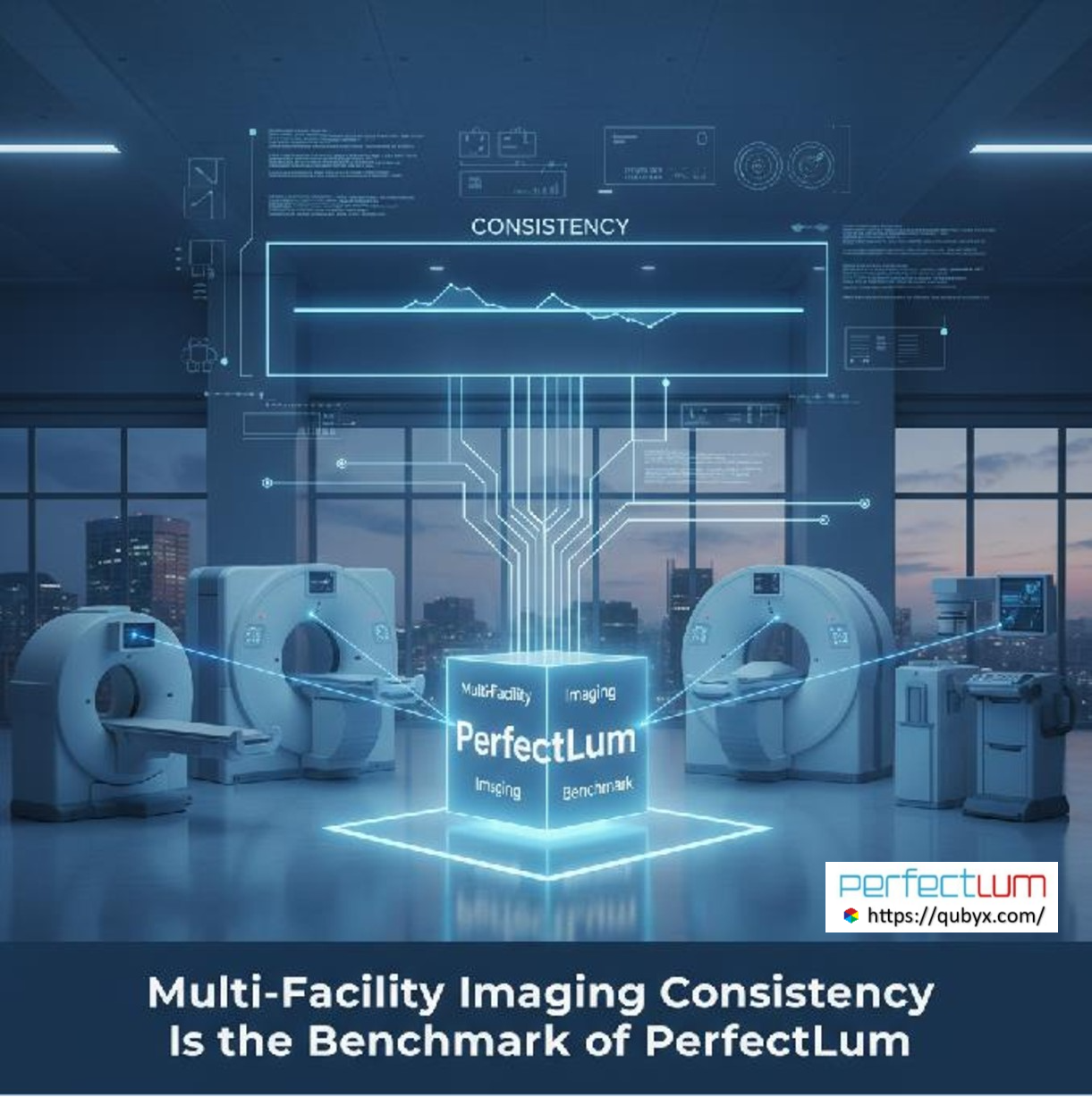
Multi-Facility Imaging Consistency Is the Benchmark of PerfectLum
- November 16, 2025
- QUBYX Team
Why PerfectLum Is the Benchmark for Multi-Facility Imaging Consistency
In modern healthcare, radiology is no longer confined to a single reading room. Large hospital groups, imaging chains, and teleradiology networks often span multiple campuses, satellite clinics, and home workstations—all of which must display images the same way if diagnoses are to be trusted.
That’s exactly the problem PerfectLum was built to solve. As a professional medical display calibration and QA platform from QUBYX, PerfectLum has become a global reference point for consistent, compliant imaging across multi-facility environments.
Below is a comprehensive SEO-focused breakdown of why PerfectLum is the benchmark for multi-facility imaging consistency—and how it supports enterprise radiology, teleradiology, and hybrid workflows.
1. The Multi-Facility Imaging Consistency Challenge
Keywords: multi-site radiology, imaging consistency, multi-facility imaging consistency, display calibration software, PerfectLum, DICOM GSDF, teleradiology QA
Healthcare networks today often include:
-
A main hospital with multiple radiology reading rooms
-
Satellite clinics and outreach centers
-
Mobile imaging units
-
Remote/teleradiology workstations at radiologists’ homes
Without a centralized strategy for multi-facility imaging consistency, each site might use different:
-
Monitor brands and models
-
Calibration tools (or none at all)
-
QA intervals and documentation habits
The result?
Inconsistent image appearance, variable contrast visibility, and audit headaches when regulators or accreditation bodies ask for proof of compliance.
PerfectLum inserts a single, unified QA layer across all displays, so every CT, MRI, X-ray, PET/CT, ultrasound, and mammography exam is interpreted against the same visual standard to achieve multi-facility imaging consistency, regardless of where it is read.
2. DICOM GSDF: The Foundation of Visual Consistency
Keywords: DICOM Part 14 GSDF, grayscale standard display function, diagnostic accuracy, multi-facility imaging consistency
At the heart of imaging consistency is DICOM Part 14 GSDF (Grayscale Standard Display Function). It defines how grayscale levels should be perceived by the human eye, ensuring that subtle differences in luminance are uniform across devices and environments.
PerfectLum:
-
Calibrates displays precisely to DICOM GSDF
-
Supports both medical-grade and high-end professional/commercial-grade monitors
-
Uses display and GPU LUTs to align luminance response, often achieving ΔE values below 1 for grayscale accuracy.
With PerfectLum:
-
A radiologist can read an abdominal CT in the main hospital in the morning
-
Then review follow-up scans from home in the evening
-
And still see the same low-contrast details and grayscale structure
This GSDF-anchored consistency is the first reason PerfectLum is seen as a benchmark for multi-facility imaging consistency environments.
3. Built-In Compliance With TG18, TG270 & DIN 6868-157
Keywords: AAPM TG18, AAPM TG270, DIN 6868-157, medical display quality assurance, QA audits
multi-facility imaging consistency networks must satisfy multiple QA and regulatory frameworks, including:
-
AAPM TG18 – classic guidance on medical display performance and test patterns
-
AAPM TG270 – modernized QA methodology for flat-panel displays and practical constancy testing
-
DIN 6868-157 – German/European standard specifying luminance, uniformity, and ambient light conditions for diagnostic workstations
PerfectLum encodes these standards directly into its testing policies and workflows, enabling:
-
Automated acceptance and constancy testing
-
Luminance response and uniformity checks
-
Ambient light (lux) measurements linked to specific room classes (DIN 6868-157)
For multi-site organizations, the advantage is huge:
QA teams can apply one set of policies across all hospitals and remote sites, and PerfectLum ensures they’re enforced and documented in a uniform way.
4. Centralized Server–Client Architecture for Multi-Site Control
Keywords: remote QA, centralized QA server, enterprise display management, multi-location radiology, multi-facility imaging consistency
PerfectLum is not just a standalone calibration utility. It offers a server–client architecture (often called Remote or Enterprise QA) that allows QA managers and IT teams to control fleets of displays from a single dashboard.
Typical capabilities include:
-
Centralized policy management
-
Define calibration frequency, test sets, and tolerance thresholds once
-
Apply them to all modalities and reading workstations across the network
-
-
Remote scheduling & execution
-
Schedule calibration and QA tests off-hours
-
Run checks on remote or home workstations without visiting the site
-
-
Fleet-wide monitoring
-
See QA status for every display (pass/fail, due dates, drift alerts)
-
Identify at-risk monitors early and schedule re-calibration or replacement
-
-
Standardized reporting
-
Unified, exportable QA records for internal audits, accreditation, and regulators
-
This centralized multi-facility imaging consistency approach makes PerfectLum ideal for:
-
Large healthcare systems with multiple hospitals
-
Independent imaging groups with many outpatient centers
-
Teleradiology providers with distributed home-reading environments
5. Vendor-Neutral Flexibility Across Brands & Sensors
Keywords: vendor-neutral calibration, hardware agnostic, multi-brand display support, multi-facility imaging consistency
Many calibration solutions are tied to a specific monitor brand or proprietary sensor. That becomes a major problem in multi-facility imaging consistency networks, where hardware diversity is the norm.
PerfectLum stands out because it is vendor-neutral and hardware-agnostic:
-
Works with displays from multiple manufacturers (e.g., EIZO, Barco, NEC, Dell, HP, LG, etc.)
-
Supports a wide range of external and built-in sensors
-
Calibrates both color (ICC/Gamma) and grayscale (DICOM GSDF) via LUTs at GPU or display level
Benefits for multi-facility imaging consistency QA:
-
You can standardize QA across all displays, regardless of brand or purchase history
-
You avoid expensive vendor lock-in when upgrading or expanding
-
You can use existing sensors instead of buying a new proprietary device for each brand
This flexibility is a core reason hospitals and imaging networks adopt PerfectLum as their system-wide benchmark.
6. Matching Displays & Cross-Site Standardization
Keywords: multi-display matching, cross-site consistency, reading room standardization, multi-facility imaging consistency
Multi-facility imaging consistency is not just about hitting DICOM GSDF individually. It’s also about making different monitors look alike to the radiologist’s eye.
PerfectLum includes features to:
-
Match displays by cloning or referencing calibration from a “golden” monitor
-
Normalize white point, luminance range, and contrast behavior across rooms and sites
-
Use reference calibration profiles to align additional displays to a standardized baseline
This is critical when:
-
Rolling out new reading rooms in additional campuses
-
Deploying mobile or temporary workstations
-
Building hybrid reading models (on-site + remote)
Radiologists gain confidence that a liver lesion, lung nodule, or microcalcification looks the same wherever they happen to be reading.
7. Ambient Light Management Across Different Environments
Keywords: ambient light measurement, DIN 6868-157, reading room environment, multi-site QA, multi-facility imaging consistency
Reading conditions in a main radiology suite are very different from:
-
An ER workstation
-
An OR theatre
-
A remote home office
DIN 6868-157 and related guidelines emphasize that ambient light (Lamb) directly affects perceived contrast and must be controlled and documented.
PerfectLum supports multi-facility imaging consistency by:
-
Measuring and logging ambient light levels (lux) for each room
-
Mapping rooms to DIN 6868-157 classes and flagging non-compliance
-
Including ambient light context in QA reports
This ensures both the display and the environment meet the required standards, even when conditions differ across sites.
8. Cost Optimization: Extending Display Life Across the Network
Keywords: optimize OPEX, extend display life, display lifecycle management, ROI
In multi-hospital systems, the display fleet is a significant asset base. Replacing monitors prematurely across several sites is extremely costly.
Because PerfectLum provides granular, objective performance data for every screen, facilities can:
-
Decide if a display is truly out of spec or still usable with calibration
-
Reassign displays with marginal performance to less demanding roles
-
Mix high-end diagnostic and pro-grade business displays intelligently without compromising diagnostic quality
Over time, this:
-
Reduces unnecessary replacements
-
Optimizes CAPEX and OPEX across the entire organization
-
Turns QA from a “cost center” into a strategic cost-control tool
9. Designed for Radiology, Medical Physics & IT Teams Alike
Keywords: radiology workflow, medical physics QA, IT integration, PACS environment
PerfectLum earns its benchmark status partly because it serves all three key stakeholder groups:
-
Radiologists
-
Trust that every workstation is diagnostic-grade
-
Experience fewer distractions from inconsistent monitors
-
-
Medical Physicists & QA Teams
-
Use automated TG18/TG270/DIN workflows
-
Generate compliance reports on demand
-
Standardize QA across multiple facilities with one tool
-
-
IT & PACS Administrators
-
Deploy centrally, integrate with existing infrastructure
-
Monitor fleets, push updates, and manage configurations at scale
-
That combination—clinical focus + standards compliance + enterprise IT readiness—is what makes PerfectLum more than “just calibration software.”
10. Why PerfectLum Is the Benchmark for Multi-Facility Imaging Consistency
To summarize, PerfectLum has become a benchmark for multi-facility imaging consistency because it offers:
-
DICOM GSDF-accurate calibration across all displays
-
Built-in support for AAPM TG18, TG270, DIN 6868-157 and related standards
-
Centralized server–client architecture for multi-site QA management
-
Vendor-neutral, hardware-agnostic compatibility with many brands and sensors
-
Display matching and cross-site standardization tools
-
Ambient light management tied to room classes and standards
-
Cost optimization and extended display life through data-driven decisions
-
Role-aligned workflows for radiology, medical physics, and IT
For healthcare networks aiming to create a unified, audit-ready, and future-proof imaging environment, PerfectLum is not just one option among many—it is the reference solution against which others are measured.
In a world where every Pixel accuracy matters, PerfectLum by QUBYX proves that innovation can deliver clinical precision without financial compromise. It’s not just calibration—it’s the democratization of diagnostic imaging.
To secure Medical Display Quality Assurance with precision while reducing the recurring costs of proprietary hardware, the answer is clear: transition to a Calibration Software platform like QUBYX OS Tools (Free) and PerfectLum today. Now, you easily pay less for Radiology.
Tags:
PerfectLum, multi-facility imaging consistency, medical display calibration software, DICOM Part 14 GSDF, AAPM TG18 TG270 DIN 6868-157, remote QA for radiology, teleradiology display calibration, vendor-neutral medical display QA,
Related Posts
- April 12, 2026
- News
- April 8, 2026
- News

- April 6, 2026
- News