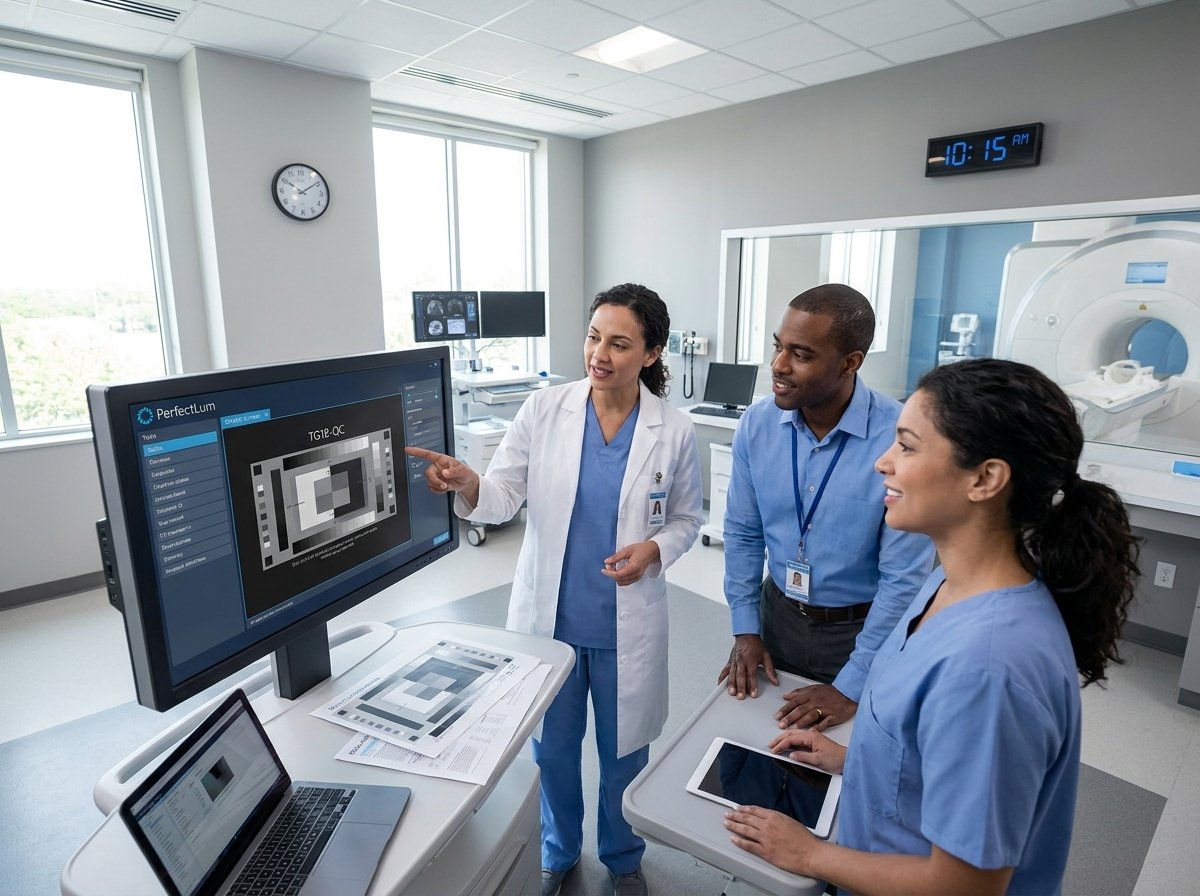

DICOM calibration is not just a checkbox for compliance—it’s essential to keeping your diagnostic displays accurate and trustworthy. When grayscale standard display function drifts, subtle image changes can lead to missed findings or false alarms. This post breaks down why routine GSDF calibration matters, outlines best practices, and shows how PerfectLum 4 simplifies acceptance and constancy testing across sites, helping your team maintain AAPM, DIN, and ACR standards with confidence. Learn more about the importance of diagnostic review monitors in radiology here.
Importance of DICOM Calibration

Ensuring your diagnostic displays remain accurate is crucial. Let’s explore why DICOM calibration plays a vital role in maintaining both diagnostic accuracy and meeting regulatory standards.
Ensuring Diagnostic Accuracy
Your displays need to be precise to ensure accurate image interpretations. Routine DICOM calibration ensures that the grayscale standard display function (GSDF) stays consistent. Imagine a situation where a minor drift causes a critical detail to be missed. This is why regular calibration checks are essential. By keeping your equipment in top shape, you minimize the risk of errors, ensuring that the images you review are reliable and accurate. The longer you wait to address calibration, the greater the risk of misdiagnosis.
Moreover, consistent calibration helps in maintaining the luminance response of your displays. This consistency ensures that every pixel reflects true colors and shades, which is critical in diagnosing subtle differences in medical images. Most people overlook the impact of display drift, but with routine checks, you stay ahead of potential issues.
Meeting Regulatory Compliance
Staying compliant with industry standards is not just a formality; it’s a necessity. Standards like AAPM TG18, DIN 6868-157, and ACR guidelines are in place to ensure that medical displays meet rigorous criteria. These standards demand precise calibration to ensure diagnostic accuracy. By adhering to these guidelines, you not only ensure quality but also protect your practice from potential legal and regulatory issues.
Compliance with these standards also boosts your facility’s reputation. When patients and partners know that your practice meets or exceeds regulatory requirements, it builds trust and credibility. For an in-depth understanding of these standards, check out this comprehensive guide.
PerfectLum 4: A Calibration Solution
PerfectLum 4 simplifies the calibration process, making it easier for your team to maintain high standards. Here’s how it streamlines testing and supports multi-site management.
Streamlining Testing and Reporting
PerfectLum 4 makes calibration straightforward. The software automates testing, reducing the manual workload for your team. Imagine a system that schedules, tests, and reports without constant supervision. That’s what PerfectLum 4 offers. This automation ensures that your displays are always in compliance, without the need for constant manual checks.
The software generates comprehensive reports after each test, giving a clear overview of your displays’ performance. These reports are audit-ready, making it simple to provide evidence of compliance when needed. The ease of reporting not only saves time but also ensures that your facility remains audit-ready at all times.
Multi-Site Calibration Management
Managing calibration across multiple sites can be daunting, but PerfectLum 4 handles it with ease. This software allows centralized control over all your displays, no matter where they are located. You can perform tasks like scheduling and monitoring from a single interface.
With PerfectLum 4, you can ensure uniform quality across all your sites. This uniformity is essential, especially when dealing with cross-site collaborations. Ensuring that all displays meet the same high standards means that your team can work seamlessly, regardless of location. Discover why central management is key to quality assurance in this detailed analysis.
Practical Calibration Best Practices
Understanding best practices in calibration can transform how your facility operates. Here’s a closer look at routine testing and the benefits of remote management.
Routine Acceptance and Constancy Testing
Routine testing is the backbone of effective display management. Regular acceptance and constancy tests ensure that your displays remain accurate and reliable. It’s not just about ticking a box; it’s about ensuring ongoing quality. By incorporating these practices, you can identify potential issues before they escalate.
Acceptance tests verify that new displays meet required standards before use. Constancy tests, performed periodically, ensure that all displays continue to perform optimally. By maintaining a schedule, you ensure that your facility remains compliant and efficient.
Remote QA Server and Audit-Ready Reports
In today’s fast-paced world, remote management is a game-changer. A remote QA server allows you to manage all your displays from a central location. This capability means you can perform calibrations, check reports, and ensure compliance without being physically present.
Audit-ready reports generated by PerfectLum 4 make it easy to prove compliance. These reports provide a detailed account of all testing activities, ensuring that you’re always prepared for audits. The ability to manage and report remotely not only saves time but also enhances overall efficiency. To learn more about choosing the right tools for your setup, visit this guide.
In conclusion, regular DICOM calibration is crucial for accuracy and compliance in radiology. PerfectLum 4 offers an effective solution to streamline this process, ensuring your displays meet the highest standards. By adopting these best practices, you’re not just maintaining equipment; you’re ensuring the best possible outcomes for patient care.
Learn more about achieving flawless diagnostic imaging accuracy with Qubyx.