
News
- Home
- The Future of Display QA, Automation & Remote Calibration | QUBYX
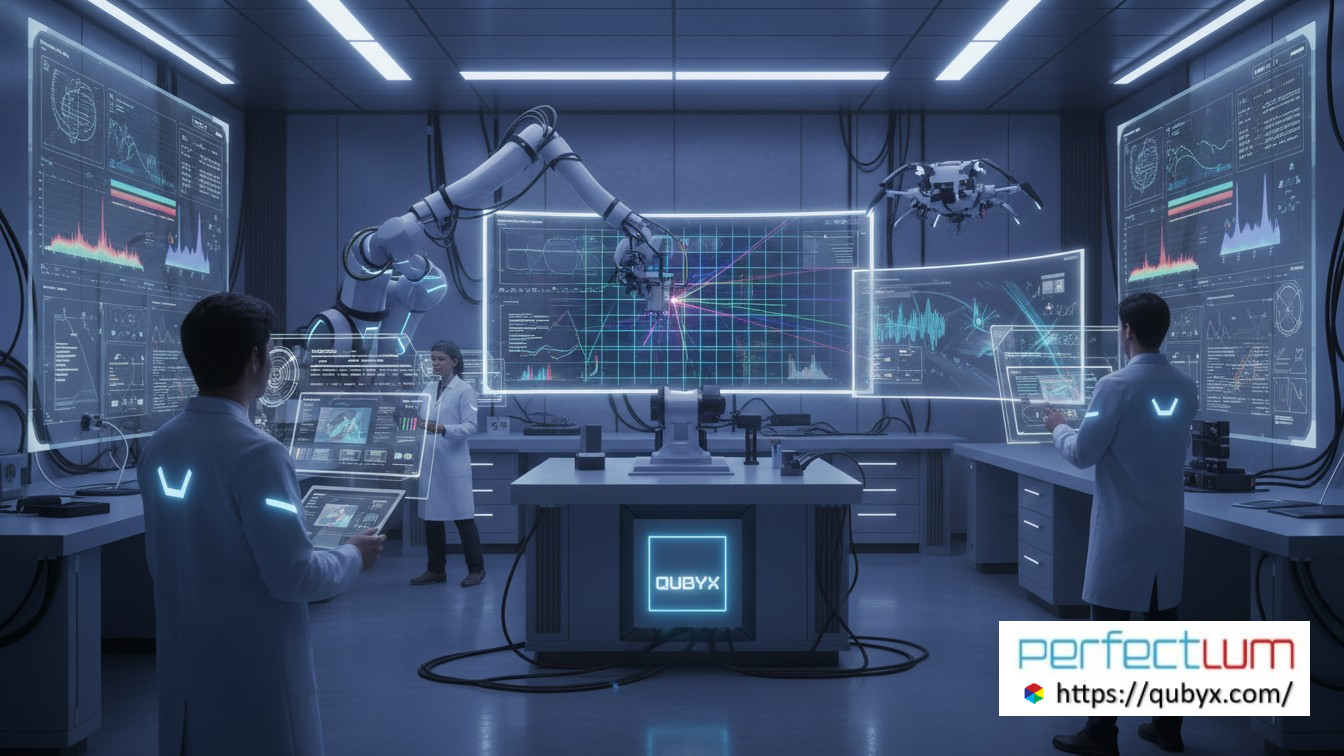
The Future of Display QA, Automation & Remote Calibration | QUBYX
- December 17, 2025
- QUBYX Team
The Future of Display QA, Automation & Remote Calibration | QUBYX
Display Quality Assurance at a Strategic Inflection Point
Display Quality Assurance (Display QA) is no longer a background technical process. It has become a strategic capability that directly influences diagnostic accuracy, operational safety, decision confidence, and regulatory compliance across mission-critical industries.
As healthcare systems digitize at scale, vehicles evolve into software-defined platforms, defense operations rely on multi-screen command environments, and geospatial intelligence becomes increasingly data-dense, the expectations placed on displays have fundamentally changed.
The future of Display QA will be defined by AI, automation, and remote calibration—and organizations that fail to adapt will face growing risk, inefficiency, and compliance exposure.
QUBYX is positioning itself at the forefront of this transformation.
Why Traditional Display QA Models Are No Longer Sustainable
Historically, display Quality Assurance has relied on:
-
Manual calibration
-
Periodic on-site audits
-
Reactive maintenance
-
Siloed workflows across departments
While adequate for small deployments, these approaches break down when organizations manage hundreds or thousands of displays across distributed locations.
Key limitations of legacy Display Quality Assurance models include:
-
Inconsistent calibration quality
-
High operational cost
-
Limited auditability
-
Inability to scale across global environments
-
Increased downtime and human error
The future demands a systemic, intelligent, and automated Display QA framework.
Trend 1: AI-Driven Display QA Intelligence
Artificial Intelligence is redefining how display quality is monitored, assessed, and maintained.
From Static Calibration to Intelligent Quality Assurance
AI enables Display QA systems to:
-
Detect luminance drift and color deviation proactively
-
Predict calibration needs before compliance thresholds are breached
-
Analyze historical performance trends
-
Adapt calibration profiles dynamically to usage patterns
Rather than relying on fixed schedules, AI transforms Display Quality Assurance into a continuous, self-optimizing process.
Industry Impact
-
Healthcare: AI helps preserve DICOM GSDF compliance and diagnostic confidence
-
Automotive: Ensures consistent cockpit and ADAS visualization quality
-
Defense: Maintains situational awareness accuracy across command displays
-
Geospatial: Protects color fidelity critical to terrain and satellite analysis
Trend 2: Full Automation Across the Display Lifecycle
Automation is the backbone of scalable Display Quality Assurance.
What Automated Display QA Looks Like
Modern automated Display Quality Assurance systems can:
-
Automatically identify connected displays
-
Apply correct calibration standards per use case
-
Validate results without human intervention
-
Generate compliance and audit reports instantly
-
Integrate with enterprise IT and QA workflows
This shift reduces dependency on specialized technicians while improving consistency and traceability.
QUBYX Perspective
QUBYX solutions are designed to support end-to-end automation, ensuring that display quality is enforced as a policy—not a manual task.
Trend 3: Remote Calibration as the New Standard
Remote calibration is no longer a convenience—it is becoming a necessity.
Why Remote Display QA Matters
Organizations increasingly operate:
-
Multi-site hospitals and diagnostic networks
-
Global automotive R&D centers
-
Distributed defense and intelligence units
-
Remote geospatial analysis teams
Remote Display Quality Assurance enables:
-
Centralized control of display performance
-
Immediate intervention without site visits
-
Standardization across regions
-
Lower total cost of ownership
Remote calibration also enhances resilience, allowing QA operations to continue uninterrupted during travel restrictions, emergencies, or staffing shortages.
Industry-Specific Implications of the Future Display QA Model
Healthcare & Medical Imaging
In healthcare, display Quality Assurance directly impacts patient outcomes.
Future-ready medical Display QA must:
-
Ensure continuous DICOM GSDF compliance
-
Support large-scale PACS and radiology networks
-
Provide audit-ready documentation
-
Minimize downtime in clinical environments
AI-driven and automated Display QA reduces diagnostic variability and strengthens regulatory readiness.
Automotive & Mobility
Modern vehicles rely on displays for:
-
Driver information
-
Infotainment
-
ADAS visualization
-
Autonomous driving feedback
Display Quality Assurance in automotive environments must scale across:
-
R&D labs
-
Manufacturing lines
-
Validation centers
Automation ensures consistency from prototype to production, while AI supports adaptive calibration for evolving display technologies.
Defense & Security
In defense and command-and-control environments:
-
Visual accuracy is mission-critical
-
Displays operate continuously under stress
-
Multi-screen synchronization is essential
Future Display Quality Assurance solutions must deliver:
-
High reliability
-
Secure remote management
-
Predictive failure detection
-
Centralized governance
Automated and AI-enabled Display QA enhances operational readiness and reduces risk.
Geospatial Intelligence & Analytics
Geospatial professionals depend on precise color and luminance to interpret:
-
Satellite imagery
-
Terrain data
-
Environmental patterns
-
Infrastructure analysis
Even minor display inaccuracies can lead to flawed insights.
Future Display QA ensures:
-
Color consistency across analyst teams
-
Reliable long-term calibration
-
Confidence in visual data interpretation
QUBYX: Building the Future-Ready Display QA Ecosystem
QUBYX approaches Display QA not as a standalone task, but as an enterprise-grade quality system.
Key Principles Guiding QUBYX’s Vision
-
Intelligence-first: Embedding analytics and AI into QA workflows
-
Automation by design: Eliminating manual dependencies
-
Remote-ready: Supporting global, distributed environments
-
Standards-driven: Aligning with medical, industrial, and regulatory requirements
-
Scalable architecture: From single sites to global deployments
With solutions such as PerfectLum and QUBYX OS Tools, QUBYX enables organizations to operationalize display quality at scale.
The Strategic Value of Future-Ready Display Quality Assurance
Organizations that invest in modern Display QA gain:
-
Reduced compliance risk
-
Lower operational costs
-
Improved decision accuracy
-
Faster scalability
-
Stronger governance and auditability
Display QA is transitioning from an IT concern to a strategic enabler of performance, safety, and trust.
Conclusion: Display QA as a Competitive Advantage
The future of Display Quality Assurance is intelligent, automated, and remote.
As displays become the primary interface between humans and complex data, ensuring their accuracy is no longer optional. AI, automation, and remote calibration will define how organizations maintain trust in visual information across healthcare, automotive, defense, and geospatial domains.
QUBYX is committed to leading this evolution—helping organizations move from reactive display maintenance to proactive, future-ready Display QA strategies.
The future of display quality is not manual.
It is intelligent.
It is automated.
It is QUBYX.
Start the conversation with our calibration experts today.
In a world where every Pixel accuracy matters, PerfectLum by QUBYX proves that innovation can deliver clinical precision without financial compromise. It’s not just calibration—it’s the democratization of diagnostic imaging.
To secure Medical Display Quality Assurance with precision while reducing the recurring costs of proprietary hardware, the answer is clear: transition to a Calibration Software platform with QUBYX OS Tools (Free) and PerfectLum today. Now, you easily pay less for Radiology.
Tags:
display QA, display quality assurance, AI display calibration, automated display calibration, remote display calibration, medical display QA, automotive display quality, defense display systems, geospatial display accuracy, QUBYX display solutions, PerfectLum, display calibration software
Related Posts
- May 24, 2026
- News
- May 16, 2026
- News
- May 14, 2026
- News