

Color Accuracy in Medical Displays: What Pathology Teams Need to Know
Accurate color calibration per DICOM Part 14 is vital for reliable digital pathology diagnostics. Tools like PerfectLum 4 streamline QA workflows, ensure compliance, and improve diagnostic confidence.
Most pathology teams trust their displays without question, but subtle color shifts can lead to costly diagnostic errors. You need digital pathology color accuracy that meets DICOM Part 14 GSDF standards to ensure every slide—whether H&E or IHC—is true to life. This post explains why precise calibration matters, how to set practical QA targets, and how PerfectLum 4 simplifies ongoing compliance for your pathology monitors. For more insights, check this guide.
Importance of Color Accuracy

Understanding the crucial role color accuracy plays in digital pathology is essential. It directly impacts the quality of diagnostic outcomes, making precise calibration non-negotiable.
Role in Digital Pathology
Color accuracy is central to digital pathology. Pathologists rely on calibrated displays to interpret slides like H&E stains, which demand high fidelity. Slight shifts in color can obscure details that are vital for diagnosis. For example, differentiating between IHC chromogens requires consistent hues, ensuring what you see is what is present on the slide. By maintaining strict color accuracy, pathology displays help avoid errors in interpretation, which is crucial in clinical settings.
Accurate color representation also means better collaboration among teams. When displays are synchronized to show the same color spectrum, everyone sees identical images. This uniformity is vital for telepathology, where multiple experts may analyze the same slide across different locations. Consistent display quality allows for clear communication and accurate joint decision-making.
Ensuring Diagnostic Confidence
Having confidence in your diagnostics starts with trust in your tools. Displays calibrated to DICOM Part 14 GSDF standards provide the reliability you need for high-stakes medical decisions. With calibration, you ensure that your displays meet industry standards, translating to trust in the results you deliver. This confidence is amplified by using tools like the PerfectLum 4, which verify that your displays consistently perform at their best.
Maintaining accurate displays also sets a foundation for better patient outcomes. When diagnosis is based on precise imaging, treatment plans are more likely to be effective. Patients benefit from the accuracy of modern imaging technology, reducing the chance of misdiagnosis. Keeping your displays calibrated is a step towards ensuring the best care for your patients.
Effective Calibration Workflows

To maintain high levels of accuracy, implementing effective calibration workflows is key. These processes help ensure your displays are always performing optimally.
QA Targets for Pathology Displays
Setting quality assurance (QA) targets is vital for consistent display performance. First, determine the standards your displays must meet, such as DICOM Part 14. Using benchmark tests like the AAPM TG18 display testing, you can evaluate your displays’ performance. Regularly scheduled QA checks ensure that any deviations in display quality are caught early.
Incorporate tools that offer detailed reporting, like Delta E reporting, which quantifies color differences. This metric is crucial for identifying shifts in display accuracy. By keeping QA targets specific and actionable, you maintain high standards in color fidelity for all diagnostic tasks. It’s also helpful to involve team members in these processes, promoting a culture of quality within your practice.
Streamlining with PerfectLum 4
PerfectLum 4 simplifies calibration workflows significantly. This software supports both Mac and Windows systems, offering flexibility in a diverse tech environment. With its user-friendly interface, calibration becomes less of a chore and more of a routine check. It automates many steps, reducing the need for manual intervention.
The software’s ability to conduct ambient light measurement and display uniformity tests ensures comprehensive quality checks. Furthermore, its compatibility with a variety of colorimeters, including the PerfectLum S1 Sensor Bundle, widens its usability. This extensive toolset not only streamlines calibration but also enhances your workflow efficiency, saving time and reducing errors.
Compliance and Quality Assurance
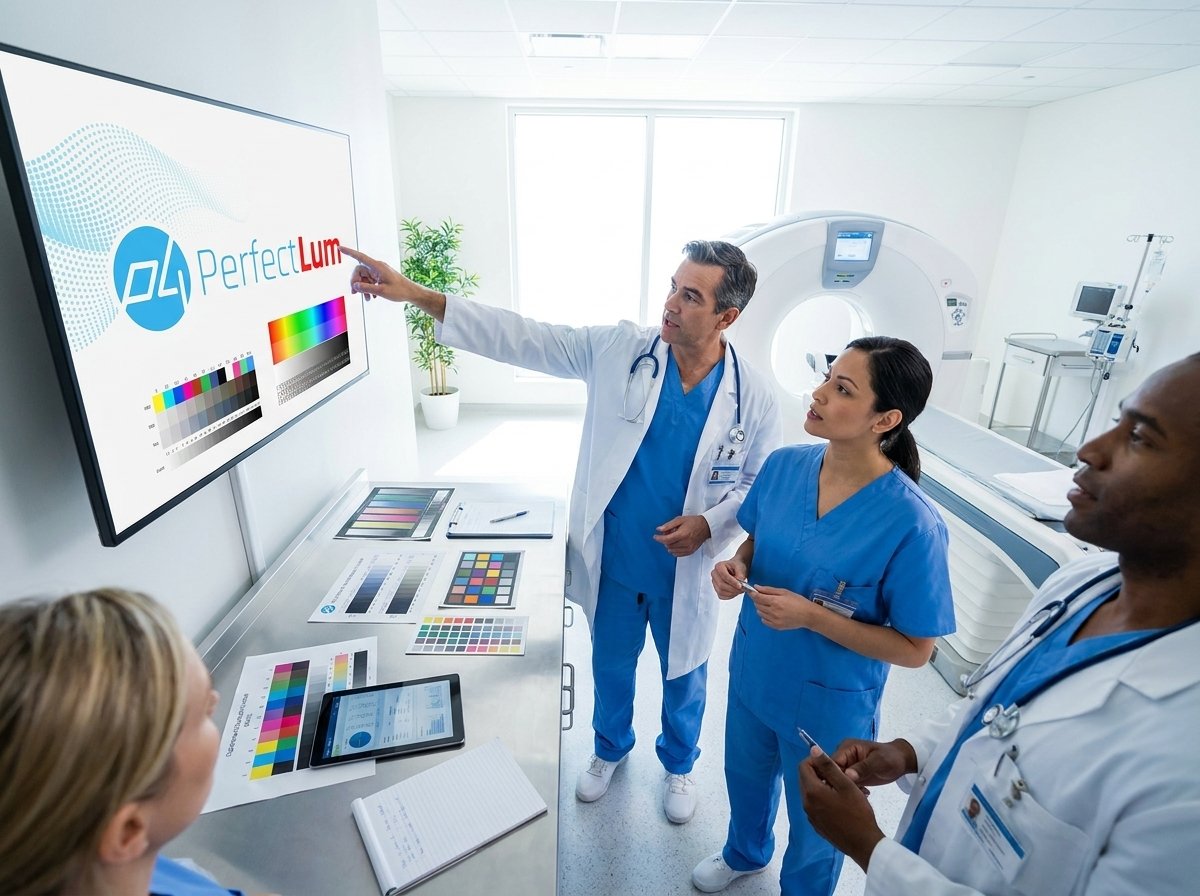
Adhering to compliance standards is not just about meeting requirements; it ensures the credibility of your diagnostic results. Regular testing and quality assurance are key components of this process.
Standards-Based Testing
Compliance with international standards like DIN 6868-157 and ACR display compliance is an integral part of maintaining high diagnostic standards. Standards-based testing ensures that your displays meet these rigorous benchmarks. This involves specific tests designed to verify that display performance aligns with industry expectations.
Using tools like PerfectLum 4 facilitates these tests by automating many of the necessary procedures. This automation not only saves time but also guarantees consistent outcomes, ensuring that every display in your facility adheres to the same high standards. By integrating these tests into your regular QA routine, you uphold the integrity of your diagnostic imaging.
Remote Quality Assurance Server
The Remote Quality Assurance Server offered by PerfectLum provides a centralized solution for managing display compliance. This tool allows you to schedule tasks remotely, ensuring that each display across various locations is up to date with the latest standards. It also enables you to start on-the-fly calibrations, making immediate adjustments when necessary.
With remote capabilities, you can manage your entire display network from a single location. This centralized control makes it easier to ensure uniform quality across all devices. Additionally, the server supports the export of data for detailed analysis, helping you track performance over time. This holistic approach to quality assurance reinforces the reliability of your diagnostic imaging, regardless of where your team operates.
In summary, maintaining digital pathology color accuracy is essential for reliable diagnostics. Effective calibration workflows and compliance with industry standards form the backbone of this effort. By leveraging tools like PerfectLum 4, you not only meet these standards but also enhance your workflow efficiency, ensuring the best outcomes for both your team and your patients.
Explore how precise calibration enhances diagnostic confidence with Qubyx.
QUBYX editorial archive.
